Blocking distracting apps for deep work
Deep work fails at a specific and predictable moment: the paragraph that will not come out right, the bug that does not reproduce, the spreadsheet column that does not reconcile. That is the moment your hand reaches for the phone, and it is not really about the phone — it is about wanting to be somewhere other than the difficult bit.
Which means a focus session has to survive the difficult bit. Anything you can undo in the four seconds it takes to feel bored will get undone exactly then.
What to block, and where the key goes
Four decisions. The last one is the mechanism rather than a flourish: unlocking means holding your phone against the key, so put it somewhere you have to walk to.
Block the feeds and the inboxes, not just the obvious ones
Social apps are the ones people list first, and they are rarely the whole problem. Email and team chat can interrupt a working day more than any feed, and they feel legitimate, which makes them harder to resist. If your job genuinely requires you to be reachable, keep one channel open and block the rest rather than keeping all of them open at reduced volume.
Keep the tools the work needs
A mode you cannot work inside is a mode you will abandon. Reference material, a calculator, the password manager, music. Blocking these makes the session pure and useless.
Pick a length you can finish
Ninety minutes to two hours is a sensible range to start with. Setting four hours and breaking it at forty minutes teaches you that your own blocks do not mean anything, which is a worse outcome than not blocking at all.
Put the key a walk away, not just out of reach
Not the far side of the desk. Unlocking means getting up, going to the key and holding your phone against it, so the placement you want is one that makes you leave your seat: a drawer in another room, a bag by the front door, a shelf in the hallway. The other end of the same desk is a reach; another room is a walk. The walk is doing the work, and the right distance is one that turns an impulse into a decision — far enough to be a nuisance, close enough that a genuine emergency is never a crisis.
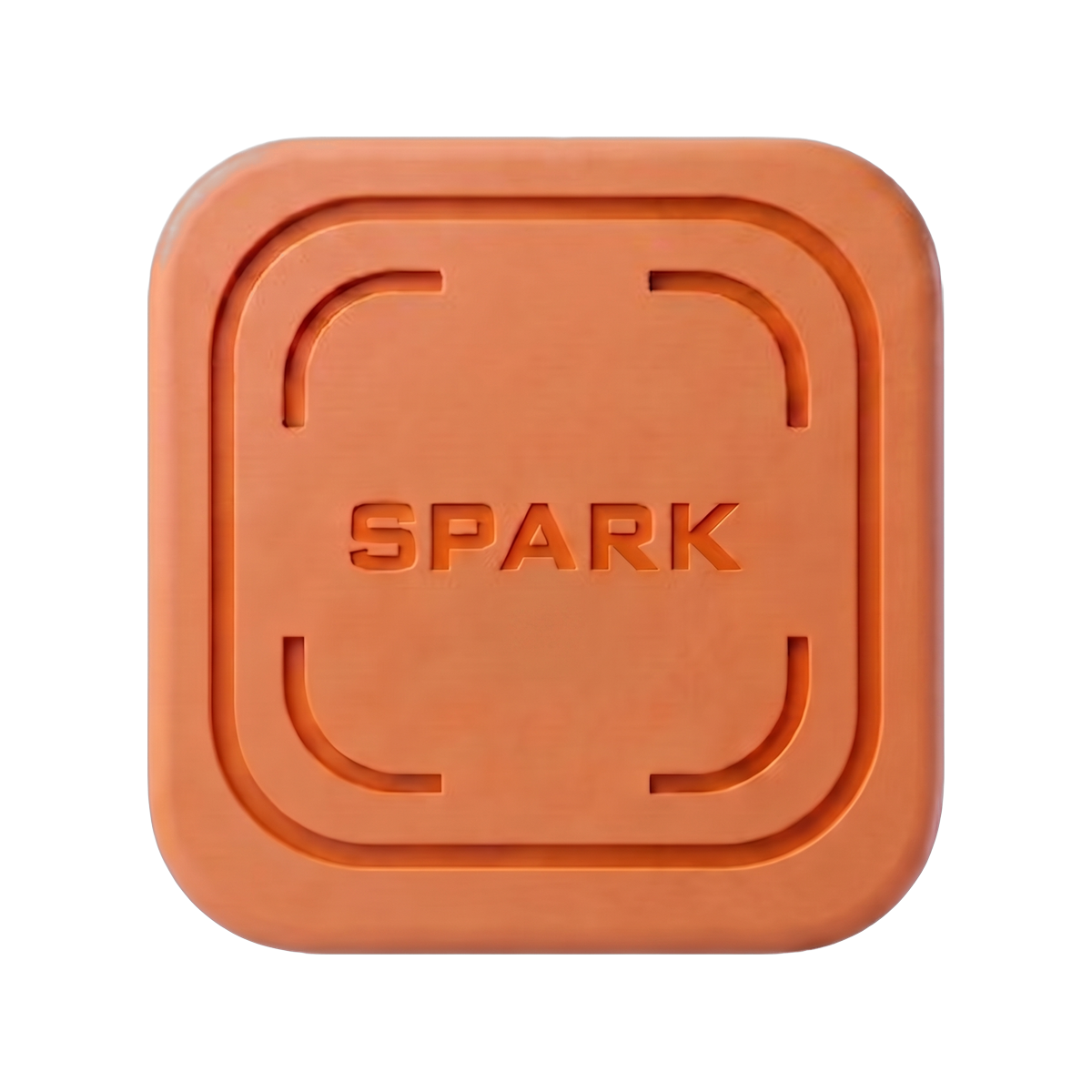 A DRAWER IN ANOTHER ROOM
The placement that makes you leave your seat, which is the whole mechanism.
Works in a flat with no spare room: the walk is to the hallway and back.
Anywhere that turns an impulse into a decision rather than a reach.
Related reading
The failure mode: locking too late
The usual pattern is to start the session, work for ten minutes, check something, work for five, check something else, and only reach for the blocker after half an hour has already gone. By then the session feels compromised and the block feels punitive. Lock when you sit down, before you have done anything. This is exactly why locking is one tap — no key needed, no Bluetooth needed, no decision about duration. The app costs nothing and the key is the one thing you buy, once; nothing about starting a session is metered. Any friction on the locking side and you will skip it on precisely the days you needed it.
What if something genuinely urgent comes in?
Calls always get through a block, and you can leave one messaging channel off the list — a phone that cannot receive an emergency is a liability, not discipline. Beyond that, the honest position is that almost nothing arriving in a two-hour window is urgent, and the small number of things that are will still be there after a walk to fetch the key. The cost is real and always payable, which is the point.
Questions about deep work
How long should a deep work block be?
Long enough to get past the uncomfortable start, short enough that you finish it. Ninety minutes to two hours is a good place to start. The number that matters is not the ideal length but the longest one you reliably complete.
Should I block email during deep work?
Usually yes, and it is the block that is easiest to argue yourself out of. Email feels like work, which is what makes it such an effective escape from work. If your role genuinely requires responsiveness, keep one channel and block the others.
Does this work in an open-plan office?
The blocking does; the key placement needs thought. A locker, a coat pocket hung by the door, or a colleague's desk on the other side of the floor all work. What does not work is your own bag under your own chair — that is a reach, not a walk, and the walk is the whole mechanism.
What do I do when I get stuck and want to look something up?
Keep a notepad — paper, or an app you left off the block list — and write the question down instead of chasing it. Most of them turn out not to need answering, and the ones that do are answered faster in one batch at the end than in fifteen separate interruptions. The looking-up urge is usually the escape urge wearing a work costume.
Is two hours of deep work a day realistic?
For most people whose job also contains meetings, two hours is an ambitious ceiling rather than a floor — and treating it as a floor is how the habit dies in week two. One protected block you actually finish beats three you abandon. Add the second only once the first has become boring.
Four more, each set up differently
Blocking your phone while studying
Study sessions fail differently: the phone is also your notes, your timer and your group chat. A setup that survives a long revision block.
Read the setupSleepGetting your phone out of the bedroom
How to stop using your phone before bed, when self-control is lowest: start the block an hour early, solve the alarm, and keep the key out of the bedroom.
Read the setupFamily timeBeing present with your family, not just in the room
Putting your phone away for family time, and keeping it away: three apps, two hours, and why a phone face-down on the table can still cost you something.
Read the setupTrainingBlocking your phone at the gym and on runs
At the gym the phone has a real job — music, a timer, your log — and still eats the rest between sets. What to block, what to keep, and where the key goes.
Read the setupIf what you want is the method rather than the situation, the guides go deeper, and how it works covers the part that makes all of this hold — unlocking means holding your phone against the key, so where you leave it is the whole design. Where these pages lean on a study, it is cited, with its caveats, on the research page.
Last updated 13 Sept 2026
A mode you configure once and stop thinking about.
Locking is one tap and never needs the key. Unlocking means walking to wherever you decided to leave it, back when you were thinking clearly, and holding your phone against it. The app is free; the key is the one-time buy.