HomeHow it works
Four steps. One of them is walking.
Spark is an app blocker with a physical key. It works in four steps: choose what gets blocked, lock it with a tap in the app, leave the key somewhere you would have to stand up for, and unlock by walking back and holding your phone against it. You set it up once — sign in, pair your Spark, pick your apps.
Choose, lock, walk away, come back on purpose.
The whole product is one asymmetry: locking costs nothing, and unlocking costs a walk. Everything below follows from that.
01
Choose what to block
Pick the apps and websites that cost you the most, and group them into modes — Work, Study, Sleep. Calls always get through; Maps, your alarm and anything else you rely on stay open as long as you leave them out. Set it up once and it stays set up.

02
Lock in a tap
Tap Lock now, or let a schedule do it. Once your Spark is paired, locking never needs the key, Bluetooth or a signal — because hesitating to lock is the real failure mode.
03
Leave the key behind
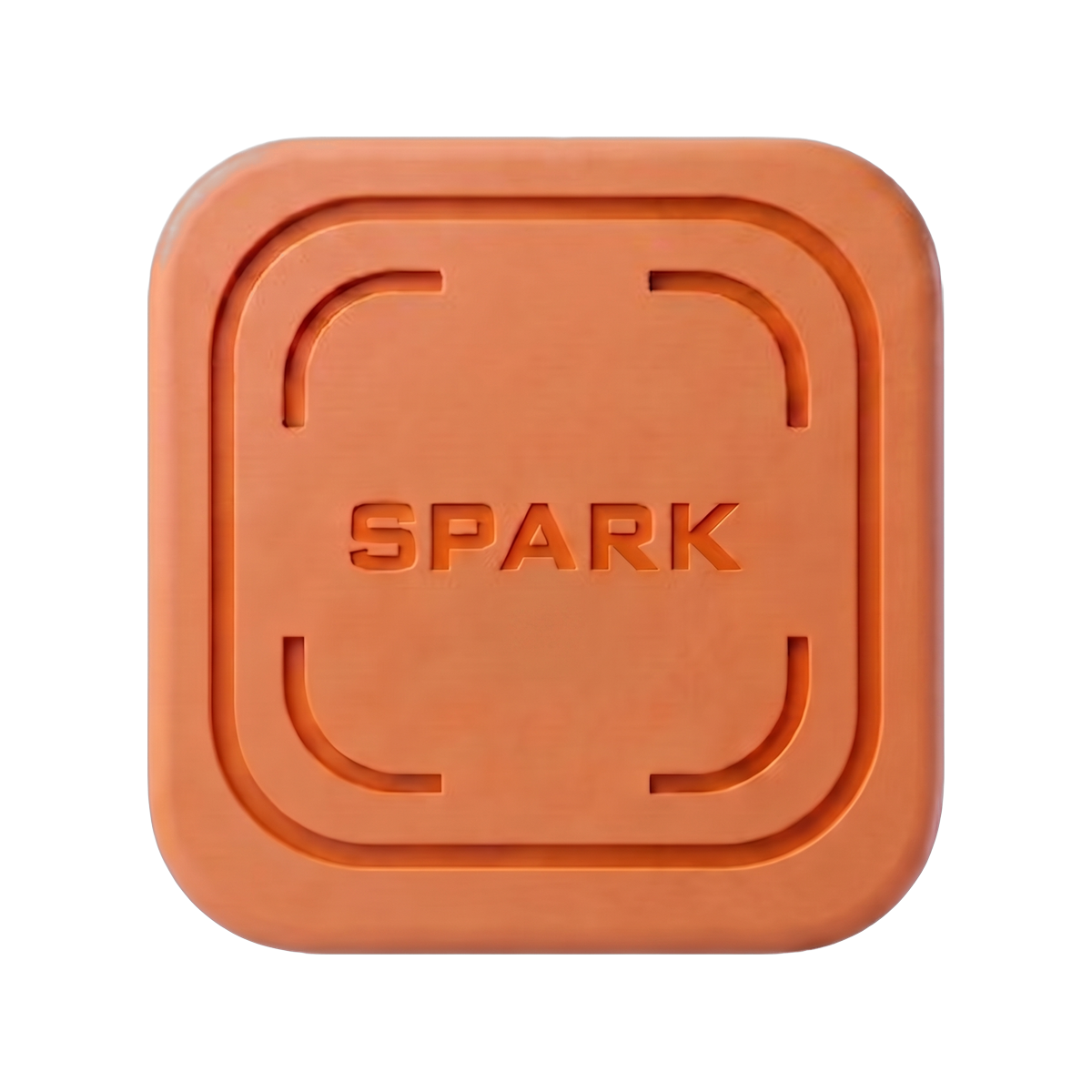
Put Spark in a drawer, another room, a bag by the door. Your apps are already locked, and moving the key changes nothing; the distance is what makes unlocking a decision — the part willpower cannot negotiate with.
04
Unlock on purpose
When you genuinely need an app back, go and get the key. Hold your phone against the Bluetooth Spark for about 15 seconds, or tap it on the NFC Spark, and your apps come back. Bringing the key near does nothing on its own. The walk is the point.
Locking happens in the app: tap Lock now, or let a schedule start it. The key is only for unlocking — hold your phone against the Bluetooth Spark for about 15 seconds, or tap it on the NFC Spark. Nothing locks when the key leaves the room and nothing unlocks when it comes back; only the hold does. The one thing locking does need is a Spark paired to your account, so the app won’t lock anything until yours is.
One set of rules per situation.
A mode is a named group of apps and websites, with a schedule if you want one. Build the ones that match your actual week — you do not need all of these, and starting with one is fine. Calls always get through, whatever the mode; Maps, your alarm and anything else you rely on stay open as long as you leave them out.
Deep work
The big ones plus the sneaky ones. Two hours, no exceptions.
See the setup8 apps · 6 PM – 10 PMStudy
Everything that isn't notes, reference, or a calculator.
See the setup3 apps · 7 PM – 9 PMFamily time
Just the three that keep pulling you out of the room.
See the setup12 apps · 10:30 PM – 7 AMSleep
From an hour before bed until the alarm goes off.
See the setupThe app is free, with no subscription, and the key is a one-time purchase. Every situation above has a full write-up in the use cases, and what the unlock does and does not protect against is on security. One mode not shown here has its own write-up too: blocking your phone at the gym.
One key, no subscription.
The app is free, with no subscription. The key — Bluetooth or NFC — is bought once and ships free to most of India.
- 1× Spark key · CR2032 coin cell
- Adhesive dock — park it on your desk, shelf or wall
- Spark app access — free forever, no subscription
1-year warranty · replaced if damaged or faulty on arrival
What you need, and what you do not.
Short version: an iPhone on iOS 17 or later or an Android phone on Android 12 or later, and a free account and an internet connection once, to pair your Spark. After that, locking and unlocking work offline, and there is nothing to charge.
| What | Bluetooth Spark | NFC Spark |
|---|---|---|
| Phone | An iPhone on iOS 17 or later, or an Android phone on Android 12 or later. | The same, plus an NFC reader. Every iPhone that runs Spark has one; many budget Android phones do not, and the buy page checks yours before you choose. |
| To lock | Only the app: tap Lock now, or let a schedule start it. Locking never needs the key, Bluetooth or a signal — but the app won't lock until a Spark is paired to your account. | |
| To unlock | Walk to the key and hold your phone against it for about 15 seconds, with Bluetooth on. | Walk to the key and tap your phone on it, with NFC on. |
| Account and internet | A free account and an internet connection once, to pair the key. After that, locking and unlocking both work offline. | |
| Power | A CR2032 coin cell. Nothing to charge, and a fresh cell costs a few rupees at any shop. | None. No battery and nothing to charge. |
| Radio | Bluetooth Low Energy (4.x). | NFC — a standard tag, read when you tap. |
| One kind per account | An account uses one kind of key, so pick Bluetooth or NFC. One key per person, and one active phone per account. | |
| Where it goes | Another room, not the next desk. Nothing happens when the key leaves or comes back, and the app never shows a distance — all that matters is that fetching it is a walk. | |
The two keys do the same job. They differ in what your phone needs and in how you present the key to unlock, and NFC or Bluetooth walks through which suits your phone. Neither is a cryptographic lock: security says plainly what that means.
Android permits stricter enforcement than iPhone. On Android, Strict mode makes Spark harder to uninstall or switch off while a session runs — friction rather than a wall: Safe Mode, or turning off Spark’s Accessibility permission, still gets past it, and Settings itself can’t be blocked. On iPhone, deleting the app ends the session. For a flat battery or a lost key there are five emergency unlocks— five for life, they don’t refill, and Strict mode switches them off. The full account of what this does and does not defend against is on security.
Still deciding? Compare Spark with the alternatives or read the FAQ. The app isn’t in the app stores yet — app availability says where things stand.
The app is free. The key makes it work.
The app costs nothing and has no subscription, but it only locks once a Spark is paired to it — the key is the one thing you pay for, once. Free shipping to most of India.