HomeCompare
You have probably tried four of these already.
Here are the 11 products people weigh Spark against: what each one actually does, the specific mechanism by which it stops working, and — for every one of them — an honest account of who should buy theirs instead.
Prices and limits last checked against each vendor’s own site on 2 Sept 2026, except where a page says otherwise. What we say about Spark was last corrected on 13 Sept 2026.
The one thing that differs
Where each one keeps the off switch
Every blocker has one. The question is whether it is on the screen, in a setting, in your pocket, or in another room.
Tap the device to end a session
UnpluqTap the Tag, or shake the phone for five seconds
FoqosScan a tag or code you hid somewhere inconvenient
OpalA difficulty setting, up to a mode sold as uncancellable
FreedomLocked Mode, with an End Session once a week
Apple Screen TimeA passcode you set yourself
Cold TurkeyA timer, a delay or a password, on the desktop
kSafeA timer on a box the whole phone goes into
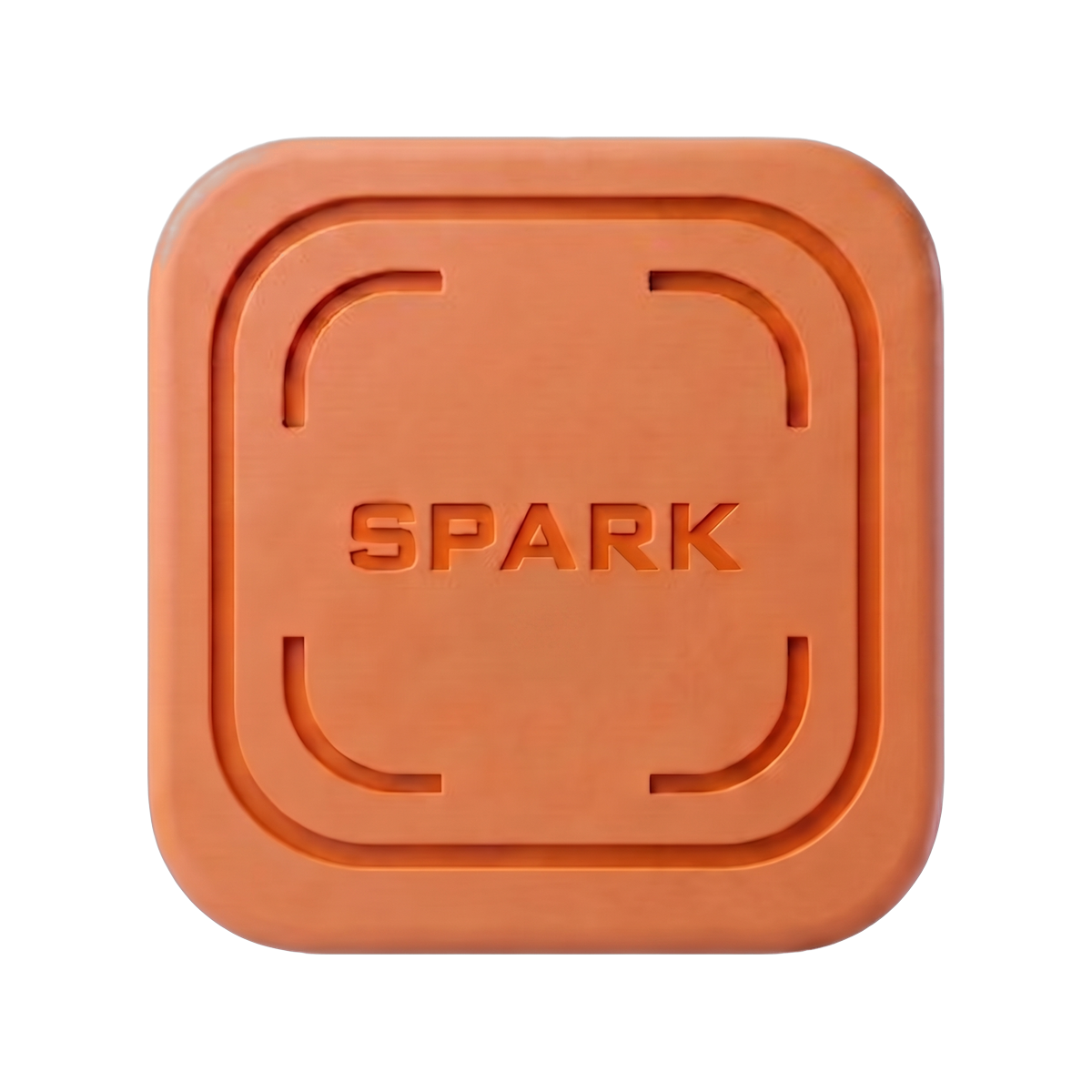

A key left in another room, held to the phone to unlock
At a glance
11 products, one axis each
Every one of these is a real answer for somebody. The middle column is the single dimension on which it and Spark genuinely differ — not a feature score, which is how comparison tables get written to a conclusion. Spark itself runs on iOS 17+ and Android 12+, and is not in the app stores yet.
| Product | The difference that matters | Platforms |
|---|---|---|
| Brick | The same idea, priced and shipped for India | iOS 17.0 or later and Android 12.0 or later. |
| Unpluq | A barrier you can pass versus a key you must fetch | iPhone 8 and later, and Android devices with NFC. |
| Foqos | Free and iPhone-only, or a key you buy once | iPhone only, requiring iOS 17.6 or later. |
| Opal | Opal's own advice is the argument for a physical key | iPhone (iOS 18.0+), macOS 13+, and Android. |
| Freedom | Breadth versus depth, and they are not competing for the same job | macOS 11+, Windows 7+, iOS 16.1+, Android 5.1+, Chromebook and Linux via browser extension, plus extensions for Chrome, Firefox, Edge and Opera. |
| Apple Screen Time | Try this first. Genuinely. | Built into iOS, iPadOS and macOS, so it is on Apple devices only. |
| Cold Turkey | Different screens, same principle | Windows and macOS only. |
| kSafe | The whole phone, or only the apps you chose | Any phone that fits inside, whatever it runs. |
| AppBlock | Both admit the same problem; the answers differ | Android, iOS, and extensions for Chrome, Edge and Brave. |
| Stay Focused | A PIN you know, or a key you have to walk to | Android (primary), iOS, and a Chrome extension. |
| Google Family Link | Supervision, or a habit the teenager owns | Supervised device: Android 7.0 and later, and ChromeOS 71 and later. |
The category question
Which app blockers use a physical key?
Four: Brick, Unpluq, Foqos and Spark. Brick and Unpluq sell a purpose-built NFC device, Foqos uses commodity NFC tags or printed QR codes, and Spark sells two keys — one Bluetooth, one NFC — that unlock only with the phone held against them. Opal, Freedom, Cold Turkey and Apple’s own Screen Time are software only, and gate their unlock with something you already carry: a passcode, a password, or a setting you can change. A timed lock box such as kSafe is physical too, but it is not a key: it shuts the whole phone away until a timer runs out, calls included.
| Product | The object | How it gates the unlock | The catch |
|---|---|---|---|
| Brick | A purpose-built NFC device | Tap the phone to the Brick to start a session; tap the same device again to end it. | The app ships with five Emergency Unbricks that unblock everything with no device present, and more can be requested from support. |
| Unpluq | An NFC Tag, on a subscription | Passing the barrier to a blocked app means tapping the Tag — or using a digital alternative such as shaking the phone for five seconds. | The Tag does not function without Unpluq Premium, so the hardware stops working if the subscription lapses. The digital alternatives are always available by design. |
| Foqos | Commodity NFC tags or printed QR codes | Twelve documented activation and deactivation strategies, including NFC, QR and timers. The intended workflow is to hide the tag or code somewhere inconvenient. | A QR code is an image: it can be photographed or reprinted and scanned later, which defeats hiding the original. iPhone only. |
| Spark (ours) | A Bluetooth key (CR2032 coin cell) or a battery-free NFC key | Lock from the app with one tap, or on a schedule — no key needed once one is paired. To unlock, hold your phone against the Bluetooth key for about 15 seconds, or tap it to the NFC key. Nothing happens at a distance, so the key goes somewhere you have to walk to. | You can always go and fetch it: the cost is a walk, not a lockout. Five emergency unlocks, for life, hidden in Strict mode. Neither key is copy-proof — the NFC key is a standard tag, and the Bluetooth key's signal can be recorded and replayed. Not shipped yet. Why the emergency unlocks are capped |
Spark sells both kinds of key, and the choice between them is about your phone, not about distance. Both work only at contact range: the NFC Spark is a tap, the Bluetooth Spark a hold of about 15 seconds with the phone against it. Either way, the key only does its job if you leave it somewhere you would have to walk to.
A tap to unlock. Needs a phone with an NFC reader, which some budget Android phones do not have. No battery, and slightly cheaper.
Hold the phone against it for about 15 seconds. Works with any phone that runs Spark — iPhone on iOS 17 or later, Android 12 or later. Runs on a CR2032 coin cell.
So the question is whether your phone has an NFC reader. Some budget Android phones do not, and the NFC Spark cannot work on those at all; the Bluetooth Spark only needs a phone that runs the app, which is why it is the default. If yours does have a reader, the NFC Spark is the cheaper way in, and the buy page checks your phone before you commit to it. If you are not sure, the Bluetooth key is the safe choice.
If you want the full argument for each rival — including where Brick or Unpluq is the better buy — the 11 head-to-head pages are below.
Head to head
Read the full comparison
Spark vs Brick
Brick is $59, or ₹7,999 on an Indian marketplace. The Spark app blocker is free, with a Bluetooth or NFC key bought once in rupees. When Brick is better.
Read the comparisonUnpluqSpark vs Unpluq
Unpluq's Tag needs a Premium subscription to work at all. The Spark app is free and its Bluetooth or NFC key is bought once. When Unpluq fits better.
Read the comparisonFoqosSpark vs Foqos
Foqos is a free, open-source blocker for iPhone only, using any NFC tag. The Spark app blocker is built for Android 12+ and iOS 17+. Who should pick which.
Read the comparisonOpalSpark vs Opal
Opal is a polished screen-time app for iPhone, Android and Mac at $99.99 a year. The Spark app blocker is free, with a key bought once. When Opal wins.
Read the comparisonFreedomSpark vs Freedom
Freedom blocks Mac, Windows, iPhone and Android in one session, and wins if your problem is a laptop. On a phone, the Spark key changes the comparison.
Read the comparisonApple Screen TimeSpark vs Apple Screen Time
If you set your own Screen Time passcode, you can always get past your limits. The two fixes that work: give the code away, or move the unlock to a key.
Read the comparisonCold TurkeySpark vs Cold Turkey
Cold Turkey has the hardest desktop locks we compared — restart to unlock, 40-day delays — but no phone version. The Spark key is for the phone.
Read the comparisonkSafeSpark vs a timed phone lock box
A timed phone lock box like kSafe takes the whole phone: no calls, no early release. The Spark app blocker locks only the apps you pick. When a box wins.
Read the comparisonAppBlockSpark vs AppBlock
AppBlock has the most determined Strict Mode on Android — and a support line that can unlock it. Spark puts the unlock on a key you walk to. When each wins.
Read the comparisonStay FocusedSpark vs Stay Focused
Stay Focused is an Indian-built Android blocker with per-app quotas and rupee pricing. Spark puts the unlock on a physical key. An honest comparison.
Read the comparisonGoogle Family LinkSpark vs Google Family Link
Family Link supervises a child's Android phone from a parent's account. Spark is not parental-control software at all. Which one your situation actually needs.
Read the comparisonThe things you tried first
Not products — habits
Before anyone buys anything they try these, usually in this order. Each works for a while, and each fails for its own specific reason.
Screen Time / Digital Wellbeing
Why it stops workingYou set the passcode, so you can remove it. The limit becomes a dialog you dismiss without reading.
What Spark does insteadThe unlock needs something you cannot summon from the couch: the key itself, held against your phone.
Deleting the app
Why it stops workingReinstalling takes forty seconds, and the account is still there waiting for you.
What Spark does insteadYou keep the app; it just won't open until you fetch the key. (Spark itself can be deleted on iPhone, which ends the session.)
Greyscale / minimalist launchers
Why it stops workingGenuinely helps for about a week, then your brain stops noticing and you scroll in black and white.
What Spark does insteadDistance does not habituate. The next room is the same distance in month six as on day one.
Rigid timers and lockout apps
Why it stops workingUnbreakable when you need it broken. A locked-out phone in an emergency is a liability, not discipline.
What Spark does insteadThe cost is a walk to the key, and calls always get through. For real emergencies there are five emergency unlocks — five for life, and off in Strict mode.
Willpower
Why it stops workingWorks when you are rested and fails exactly when it matters. It is a plan that assumes you are always at your best.
What Spark does insteadNothing to sustain. The decision was made earlier, by a version of you who was thinking clearly.
Method
How these comparisons are written
Every price, platform requirement and limit on these pages was read from the vendor’s own site or store listing, and each page links its sources so you can check them yourself. Where something could not be verified, the page says so instead of guessing.
Every comparison names the readers who should buy the other product. That is not modesty — several of these are genuinely better than us at specific jobs, and a comparison that never concedes anything is an advertisement wearing a table.
Spark’s own column never carries a rupee figure. The price of each key is admin-editable and lives in the catalogue, so a number typed into a static comparison page would eventually disagree with the checkout — and a comparison whose own price is wrong has lost the argument before it starts. What the column does state is the shape of the deal, which does not move: the app is free with no subscription, it locks nothing until a key is paired, the key is bought once, and the current price is on the buy page with GST shown separately.
Where a limitation we list for another product is equally true of Spark — the same minimum iOS and Android versions, the same revocable Screen Time permission on iPhone, an account and a server, a key that can be copied — the page says so beside it. A row is a difference or it is not a row.
We have not shipped yet, so we have no reviews, no ratings and no press to quote, and we are not going to imply otherwise. Where a competitor’s track record is a real reason to choose them today, the page says so in as many words.
To be fair
When you don’t need us
If Screen Time or Digital Wellbeing already works for you, keep using it — it is free, it is built in, and it needs no third-party app to be granted permissions. A physical key is worth paying for only if you have watched yourself dismiss that dialog enough times to stop believing your own promises. Start with the Screen Time page, which explains exactly why the built-in tools fail when you administer them yourself.
Spark also runs happily alongside the built-in tools, and alongside a desktop blocker if your laptop is the real problem. They are not mutually exclusive, and layered friction beats one wall. If you want the mechanism before the shopping, read how it works or the guides.
Locking is one tap. Unlocking costs you a walk.
Buy a Spark once and sign in to pair it. After that, locking is one tap, even offline, and there is no subscription. Leave the key in another room and unlocking means walking to it and holding your phone against it — a willpower problem becomes a walking problem.