HomeWhy a physical key
Your phone isn't the problem. It's that it's always winnable.
Every blocker you administer can be un-administered by you, from the sofa, in four seconds. Spark's answer is deliberately unclever: make locking completely free, and make unlocking cost a walk to another room.
You are not going to throw away the device that holds your maps, your money, your camera and your family. The goal was never to quit — it was to stop losing to it by default. What follows is the whole argument for a physical key, including the parts that do not flatter us.
Your phone is both things at once
The same slab is a navigation system, a bank, a camera, a notebook and the way you reach everyone you love. It is also the most sophisticated attention-capture device ever manufactured, tuned by a very large number of very good engineers to be slightly more interesting than whatever you were about to do.
Those are not two products you can buy separately. That is the entire difficulty. Advice to “just use it less” skips past the fact that most of what it does, you genuinely need — which is why the useful question is not how to want it less, but where the off switch should live.
How much is it actually costing you
We are not going to tell you what your screen time is, or quote you an average, or decide on your behalf how much of it you would want back. You already have the number: open Screen Time on iOS or Digital Wellbeing on Android and read your daily average.
Multiply your daily average by 365 and divide by 24. An hour a day is fifteen entire days a year. Two hours a day is a month. Whatever your figure is, it is yours and it is already true — this is arithmetic on a number your own phone gave you, not a statistic about anybody else.
Read your daily average from Screen Time on iOS or Digital Wellbeing on Android. Each square is one day of the year. Nothing you type here is stored or sent anywhere.
Which is why quitting advice fails
The flip-phone answer solves distraction by removing utility, which is why almost nobody sticks with it past a fortnight. The digital-detox weekend solves it temporarily, then hands you back exactly the setup that caused the problem. Neither one touches the mechanism.
You do not have a knowledge problem. You already know you are on your phone too much.
Which means another dashboard, another weekly report and another notification telling you what you already know are not interventions. They are the same information, delivered again, to someone who was never short of it.
The real opponent
The person who decides to focus and the person who breaks that decision are the same person in different states. One is rested, has a plan, and is thinking about this month. The other is tired, is thinking about the next ninety seconds, and is extremely good at finding reasons.
Every tool that lets the second person undo the first person’s decision with a tap is not really a blocker. It is a suggestion with extra steps. That is the structural failure behind almost every app in this category, and it is worked through in detail in why app blockers stop working after a week.
The off switch is on the same screen. On is a tap, off is a tap, and both are paid for with the willpower you installed it to stop spending.
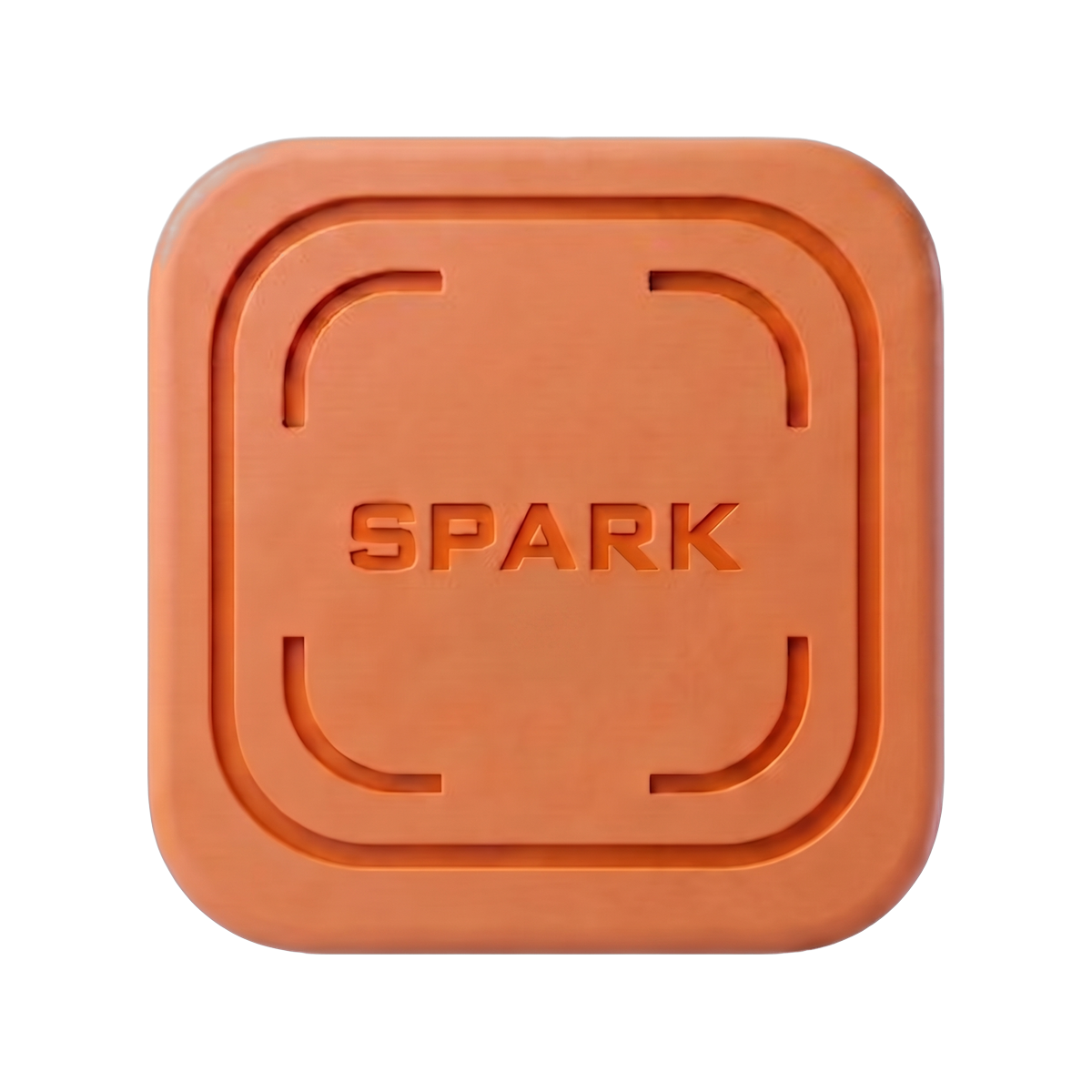
The off switch is in another room. The phone asks one question — is the key being held against me? — and until you fetch it and hold it there, the apps stay shut.
Five honest failure modes.
None of these are stupid. Most of them work for a week or two, which is exactly what makes them so hard to give up on.
| What people try | How it fails | What Spark changes |
|---|---|---|
| On the screenScreen Time / Digital Wellbeing | You set the passcode, so you can remove it. The limit becomes a dialog you dismiss without reading. | The unlock needs something you cannot summon from the couch: the key itself, held against your phone. |
| In the app storeDeleting the app | Reinstalling takes forty seconds, and the account is still there waiting for you. | You keep the app; it just won't open until you fetch the key. (Spark itself can be deleted on iPhone, which ends the session.) |
| In your habitsGreyscale / minimalist launchers | Genuinely helps for about a week, then your brain stops noticing and you scroll in black and white. | Distance does not habituate. The next room is the same distance in month six as on day one. |
| Nowhere at allRigid timers and lockout apps | Unbreakable when you need it broken. A locked-out phone in an emergency is a liability, not discipline. | The cost is a walk to the key, and calls always get through. For real emergencies there are five emergency unlocks — five for life, and off in Strict mode. |
| In your headWillpower | Works when you are rested and fails exactly when it matters. It is a plan that assumes you are always at your best. | Nothing to sustain. The decision was made earlier, by a version of you who was thinking clearly. |
Several of these are genuinely good tools that we are not trying to talk you out of. A longer, product-by-product version is on the comparison pages.
So put the undo somewhere else
Spark’s answer is not clever, and it is not meant to be. Once your key is paired, locking is free: one tap in the app or a schedule, instant, no key needed, and it works with Bluetooth switched off entirely — because hesitating to lock is the real failure mode, and nothing should ever stand between you and protecting your own attention.
Unlocking is the part that costs. Your phone won’t release the apps until you hold it against your Spark — about 15 seconds for the Bluetooth key, a tap for the NFC one. Leave the key in another room and the cheapest route back to the feed is standing up. A willpower problem becomes a walking problem, and walking problems are much easier to lose to your own advantage. What that check does and does not protect against is on security; the four-step version of the loop is on how it works.

One tap in the app, or a schedule. Instant, offline, and the key does not need to be in the room. Nothing should ever stand between you and locking.
Hold your phone against the key — about 15 seconds for the Bluetooth Spark, a tap for the NFC one. Leave it in another room and the cheapest route back to the feed is standing up.
Why distance does not wear off
This is the part that matters most and gets argued about least. A confirmation dialog stops working around the tenth time you see it. A greyscale screen stops registering after about a week. A password you set yourself stops being a password the moment you remember it. Every psychological friction habituates, because habituation is what brains do to repeated stimuli — it is not a character flaw, it is the mechanism working correctly.
Physical distance does not habituate. The other side of the flat is exactly as far away in month six as it was on day one. It costs the same thirty seconds every single time, and no amount of familiarity makes those thirty seconds shorter. That is the only reason to put an object in the loop at all — not because hardware is nicer, but because distance is the one cost that does not erode. There is published work on what a phone’s mere proximity may cost — including a replication that did not find the effect — collected on the research page.
What we are not claiming.
This is not a cure and it is not a cage. A determined person with physical access to their own phone can always get around it, and we would rather write that down than imply a guarantee we cannot keep. Spark is built to beat a moment of weakness — which is, in practice, the thing that actually beats you.
Specifically, and in the order the objections usually arrive:
- Enforcement is not the same on both platforms.The blocking runs on your phone through the operating system’s official APIs, and those APIs differ. On Android, Strict mode makes Spark harder to uninstall or switch off while a session runs — but it is friction, not a wall: Safe Mode or turning off its Accessibility permission gets past it, and Settings itself can’t be blocked. On iPhone, deleting the app ends the session. We document the gap instead of averaging over it.
- The escape hatch is real, and it is meant to be.Emergency unlocks let you get back in without the key, for a dead battery or a lost key or a genuine emergency. There are five, for life — they don’t refill — and Strict mode switches them off, so they can rescue you without quietly becoming your normal way to unlock.
- This is a proximity check, not security. The Bluetooth Spark sends a fixed identity, so a recording of it can be replayed, and the NFC Spark is a standard tag that can be copied. Spark is built to beat a moment of weakness, not someone set on cheating — security lists exactly what gets past it.
- The key only helps if you actually leave it somewhere. A Spark in your pocket is fifteen seconds away — one tap, for the NFC key — and an unlock within reach is what we just spent this whole page arguing against. The distance is the product; the object is only how you get it.
We have no outcome figure of our own to show you, and would rather say so than print one we cannot stand behind. Nothing has shipped, so nothing has been measured.
Until there is a real study behind a number, the research pagecites other people’s published work and is explicit that it is theirs, not ours.
If the trade still sounds right after all that: the app is free, with no subscription, and it starts working once your Spark is paired — the keyis the one thing you pay for. The app isn’t in the stores yet; app availability says where things stand. The FAQ answers the loophole questions — starting with what happens if you just turn Bluetooth off.
Make the undo cost a walk.
Locking stays one tap, instant and offline. Unlocking means getting up and holding your phone against the key — a cost your tired self cannot pay from the sofa. The app is free, with no subscription; the key is a one-time purchase, shipped free across India.