HomeGuidesWhy app blockers stop working after a week
Why app blockers stop working after a week
Why do app blockers stop working? Rarely willpower: the off switch sits as close as the on switch. The mechanism, and what actually fixes it.
By Puneet Kandpal9 min readUpdated 13 Sept 2026What changed: The uninstall advice no longer implies any blocker, ours included, can stop removal, and Spark's unlock is described as the walk and hold it is rather than a key “in the room”. The Screen Time claims now cite Apple's own guides.
On this page
The pattern is so consistent it is almost funny. You install a focus app on a Sunday evening, feeling clear-headed and slightly ashamed of your screen time report. For four days it is transformative. By day nine you have found the settings page. By day fourteen the app is still installed, still technically running, and doing nothing at all.
It is tempting to read that as a personal failure. It is not. It is a design property of the tool, and it is predictable enough that you can spot which blockers will survive contact with a bad Tuesday before you install them.
The symmetry problem
Almost every blocker treats locking and unlocking as the same action with opposite signs. One tap turns it on. One tap — sometimes with a confirmation, sometimes with a delay — turns it off. The two directions cost roughly the same.
That feels fair, and it is exactly the problem. The person who switches a blocker on and the person who switches it off are in completely different states. The first is rested, has a plan, and is thinking about the coming month. The second is tired, is thinking about the next ninety seconds, and is remarkably creative about justifications. A symmetric switch hands the second person the first person's authority at the precise moment they are least equipped to use it.
Any lock you can undo from the sofa, you will undo from the sofa.
Why friction erodes
The usual fix is to make unlocking annoying: a confirmation dialog, a five-second countdown, a sentence you have to type out, a breathing exercise. These genuinely work, and they genuinely stop working, for the same reason.
The first time a dialog appears, you read it. By the tenth time your thumb has found the button before your eyes have found the words. Anything you can wait out, you learn to wait out — and you learn fast, because the reward is immediate and the cost is trivial. Software friction is a speed bump on a road you drive every day. You stop noticing it.
This is not a criticism of the apps that use it. A pause is much better than nothing, and for a lot of people it is enough. But if you have already watched a pause stop working for you, adding a longer pause is not the answer. The category of solution is wrong.
The four ways blockers actually get defeated
When people say a blocker "stopped working", they usually mean one of four specific things. It is worth knowing which one is yours, because the fix is different in each case.
1. The documented escape hatch
The tool ships with a way out and you use it. Apple's Screen Time limits offer "Ignore Limit" and "Ask For More Time" — options put there deliberately, because a limit with no override would trap people. You know your own passcode, so the limit is a suggestion you have agreed to receive.
2. The uninstall
You delete the blocker. On most platforms this takes about four seconds, and on iOS the app you were avoiding can be reinstalled from the App Store almost as fast, with your account still logged in and your feed still waiting.
3. The sideways route
The app is blocked, so you open the website instead. Or the embedded browser inside another app. Or the desktop version. Blocking is usually enforced per-app, and the same content is almost always reachable by a second path.
4. Quiet abandonment
Nothing dramatic happens. You just stop turning it on. This is the most common failure and the least discussed, and it has a specific cause: locking was made expensive. If starting a focus session takes six taps and a decision about duration, you will skip it on exactly the days you needed it.
| Failure mode | What it looks like | What actually fixes it |
|---|---|---|
| Documented escape hatch | You tap “Ignore Limit” without thinking | An unlock that needs something not in the room |
| Uninstall | The blocker is gone by Thursday | Nothing fully — removal can be made harder, never impossible |
| Sideways route | Blocked in the app, open in the browser | Blocking by content, not only by app icon |
| Quiet abandonment | Still installed, never switched on | Make locking free and instant — one tap, no setup, no decision |
What a durable blocker looks like
Everything above points at one asymmetry. The cost of protecting your attention should be zero. The cost of giving it away should be real, and it should not be payable from where you are sitting.
That second half is the hard part, because software running on your phone cannot impose a cost your phone cannot revoke. You are the administrator of your own device. Any wall the software builds, you have the authority to knock down, and at 11pm you will use it.
The only costs that hold are the ones that live outside the phone. Physical distance is the obvious one, and it has a property software friction does not: it does not habituate. A dialog stops working the tenth time you see it. A drawer in another room is exactly as far away in month six as it was on day one. There is no clever sequence of taps that shortens a walk.
- Locking is free: one tap, no setup, no negotiation about how long.
- Unlocking needs something that is not within arm's reach.
- The cost is always payable — so it is a discipline, not a trap.
- The tool is honest that a determined person can defeat it, because a determined person can defeat anything you own.
That last bullet is not modesty, it is the test. A tool that claims to be unbreakable is either lying or has locked you out of a phone you may need in an emergency, and both of those are worse than the problem. The useful claim is narrower and checkable: it should be too expensive to defeat in the ninety seconds when you actually want to.
The mechanismHow Spark applies that asymmetry: locking is one tap in the app that never needs the key, and unlocking means walking to a small key — Bluetooth or NFC — and holding your phone against it.
Read this
One tap in the app, or a schedule. Instant, offline, and the key does not need to be in the room. Nothing should ever stand between you and locking.
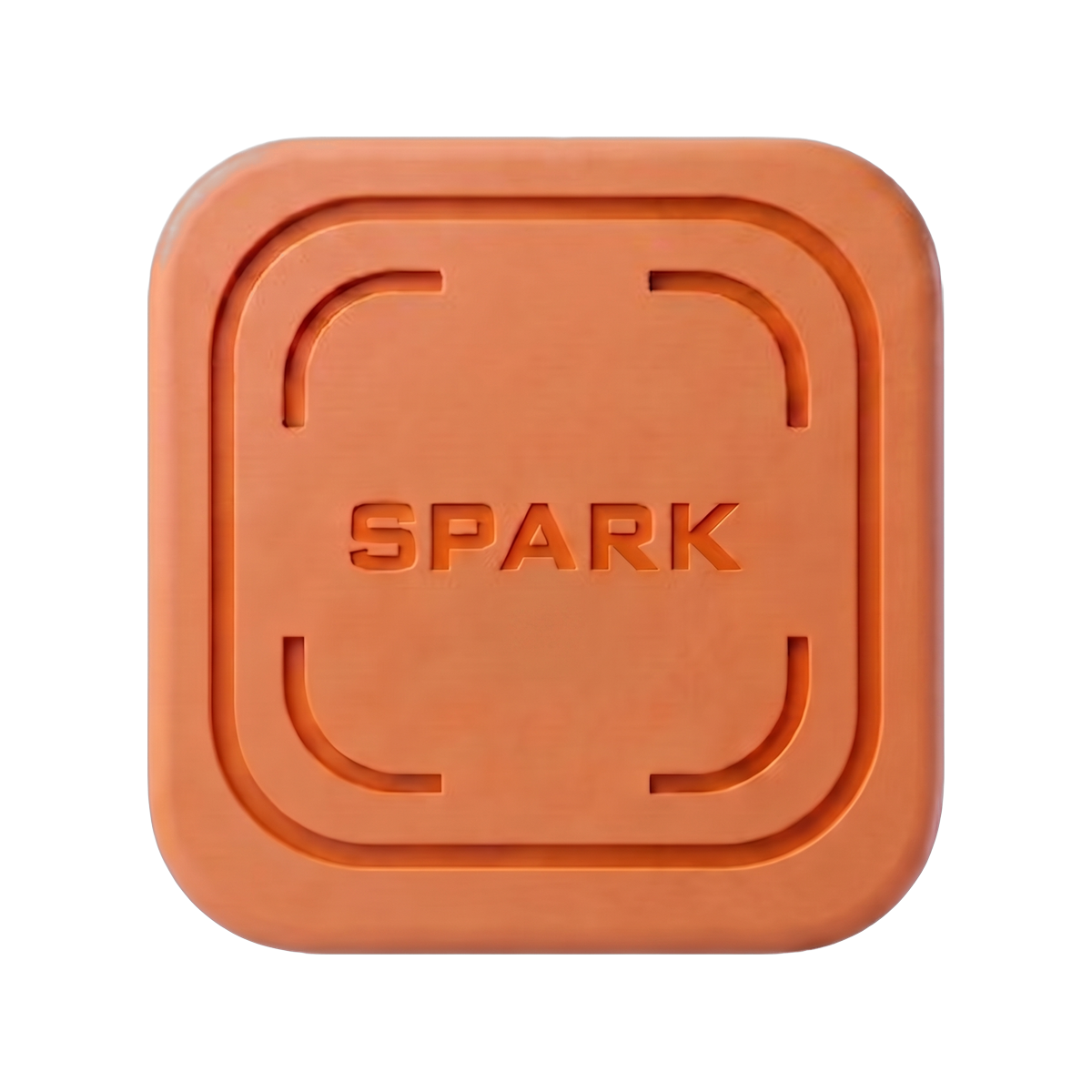
Hold your phone against the key — about 15 seconds for the Bluetooth Spark, a tap for the NFC one. Leave it in another room and the cheapest route back to the feed is standing up.
How to choose, given all of that
If you have never tried anything, start with what is already on your phone. Apple's Screen Time and Android's Digital Wellbeing are free, built in, and enough for a meaningful number of people. Do not buy anything until they have failed you.
If they have failed you, be precise about which of the four modes above you fell into. If the answer is the escape hatch, no amount of extra software will help — you need the unlock to depend on something the software cannot grant. If it is the uninstall, be realistic about the ceiling: on a phone you own, no blocker, ours included, can make removing it impossible, so the most any tool offers is friction on the way out. If the answer is quiet abandonment, you do not need a stricter tool, you need a faster one.
And be precise about the platform, too, because the ceiling is different. iOS blocking runs inside Apple's Screen Time machinery and inherits its limits; Android permits stricter enforcement, including making the uninstall harder while a session is running — though booting into Safe Mode still gets past it. The two step-by-step guides below are separate for that reason rather than for tidiness.
On iPhoneEight iPhone methods ranked — Screen Time limits, Downtime (Screen Time Schedule on iOS 27), Guided Access, Focus modes, Shortcuts automations — with the exact way each one is bypassed.
Read thisOn AndroidSix Android methods ranked, including the second user profile — one of the strictest free options on any phone — and what the accessibility permission really does.
Read thisNextA side-by-side look at Screen Time, deleting the app, greyscale, rigid timers and willpower — what each gets right and the exact way each one fails.
Read thisCommon questions
Are app blockers a waste of money?
Not inherently, but it is easy to buy the wrong category for your failure. If you abandon tools because starting them is a hassle, a stricter blocker will make things worse. If you defeat tools because the off switch is one tap away, a gentler blocker will not help. Diagnose the failure before you buy.
Why do built-in limits like Screen Time stop working?
Because you hold its passcode and it offers "Ignore Limit" and "Ask For More Time" by design. Those options exist so a limit can never trap you, which also means the limit is only ever advisory to the person who set it.
Does adding a longer delay before unlocking help?
For a while. Delays are learned around quickly, because the cost of waiting is small, certain and immediately rewarded. A delay you can sit through is a delay you will sit through.
Can any blocker be fully bypassed?
Yes. You are the administrator of your own phone, so any tool you install you can eventually remove. The realistic goal is not an unbreakable cage — it is making the cheapest route back to the feed expensive enough that a moment of weakness cannot pay for it.
Why does a physical key work when a dialog does not?
Because a dialog is a cost you can pay while seated and a walk is not, and because distance does not habituate. You learn to tap through a warning in about a week; a key in another room is exactly as far away in month six as on day one.
Sources
- Apple: Set schedules with Screen Time on iPhone — “By default, Screen Time limits can be ignored once reached”, unless Block at Downtime is on.
- Apple: Remove or delete apps from iPhone — Deleted apps can be downloaded again from the App Store.
More from the guides
The app blocker nobody can bypass doesn't exist. Here's what comes closest
Every app blocker has a documented way out — including ours. Here is each one's exit, what it costs you at the moment of temptation, and which come closest.
Read the guideWhy blockers failScreen Time's “Ignore Limit”: how to take it away, and why it is there
By default an iPhone limit can be ignored the moment you reach it. The only thing that removes that button is a passcode — and even then, one minute survives.
Read the guideWhy blockers failScreen Time not working on iPhone: every fix, and the one it cannot make
Screen Time not working? Fix limits that never block, Downtime that won't start and settings that won't sync, and see why the passcode decides the rest.
Read the guideMove the unlock off the phone.
Locking is one tap and never needs the key. Unlocking means getting up and holding your phone against it — a cost your tired self can't pay from the sofa. The app is free; the key is the one-time buy.