HomeGuidesThe best app blockers for Android, honestly compared
The best app blockers for Android, honestly compared
Nine Android app blockers, what each is genuinely best at, what each costs in India, and the one weakness every single one of them shares.
12 min readUpdated 18 Sept 2026
On this page
We sell a competing product, so read this accordingly — and then check it, because everything below comes from each vendor's own pages and Play listings, read on 18 September 2026 on the Indian storefront. Where a vendor does not publish something, this page says so rather than filling the gap.
The nine, at a glance
| App | Who makes it | Costs | Best at |
|---|---|---|---|
| Digital Wellbeing | Free, built into Android | App timers and Focus mode, with nothing to install | |
| AppBlock | MobileSoft (Czechia) | Free tier; Play India lists in-app purchases from ₹25 to ₹11,700 | The deepest Strict Mode — it can block Settings, recents, split screen and reinstalls |
| Stay Focused | INNOXAPPS (Noida, India) | Free with ads; Play India lists in-app purchases from ₹49 to ₹3,999 | Per-app quotas by usage, launches and unlock count |
| BlockSite | BlockSite | Free with ads, plus in-app purchases | Apps, sites and adult content in one familiar package |
| StayFree | ST Pulse | Free, plus in-app purchases | Usage analytics first, blocking second |
| Freedom | Eighty Percent Solutions | Free, plus in-app purchases | One session across phone, Mac, Windows and browsers |
| ScreenZen | screenzen | Free, plus in-app purchases | A breathing delay before an app opens, rather than a block |
| one sec | riedel.wtf | Free for one app; Pro for more | The same deliberate pause, taken further |
| Family Link | Free | A parent supervising a child's Android phone at account level |
A word on those rupee figures, because most roundups get this wrong. Google Play publishes a *range* for an app's in-app purchases — “₹25 to ₹11,700” — not what any particular plan costs. Neither AppBlock nor Stay Focused publishes a per-tier rupee price on its own site, so anyone quoting you an exact annual figure in rupees has inferred it. Check the price inside the app before you buy.
Digital Wellbeing: start here
It is free, already installed, and enough for a meaningful number of people. App timers dim an app's icon and close it when the time runs out until midnight; Focus mode pauses a chosen set of apps on a schedule, with a Take a break button. Google notes the exact steps vary by manufacturer.
Its limits are honest and quickly found: a timer is deleted in a few taps, and everything works on whole apps — a timer on YouTube is a timer on your lectures too. Exhaust it before you pay for anything.
AppBlock: the strictest software option
AppBlock is the one to look at if you have already defeated something gentler. Its Strict Mode is unusually thorough: the vendor documents blocking the Settings app — which it calls one of the most effective ways to prevent bypassing AppBlock on Android — along with recent apps, split screen, and applications you reinstall to get around a block. It uses the accessibility service plus device admin, so removing it is not a two-tap job.
Two things to know before you commit. On the free tier, Strict Mode is capped at 24 hours. And AppBlock operates a human escape hatch: its support issues a one-time code to disable Strict Mode, deliberately easier the first time you ask and harder afterwards. That is a sensible design for a company that does not want to trap people, and it is also a door that exists.
Stay Focused: quotas rather than walls
Built by INNOXAPPS, a company in Noida, and priced in rupees natively — which for Indian users removes the currency-conversion friction most of this category has. Its distinctive feature is granularity: limits per app by time used, by number of launches, and by unlock count, plus a Pomodoro timer for study sessions.
The mechanism is worth understanding. In the vendor's own words, device administrator permission is what stops you uninstalling it, and the accessibility API is used optionally to see the websites you browse so it can block them. Its Strict Mode is gated by a PIN, an expiry date, a QR code you must scan, or retyping random text — the QR option being the most interesting, since you can leave the code in another room. The free tier shows ads.
The friction apps: ScreenZen and one sec
These two do not try to be walls. They put a pause — a breath, a few seconds of nothing — between tapping an app and it opening. It sounds trivial and is the most psychologically sound idea in this list: most feed-opening is not a decision, and a few seconds is often enough for the intention to reassert itself. one sec's free tier covers one app; ScreenZen's free tier is more generous.
They are the right choice if you open Instagram fifty times a day without meaning to, and the wrong one if you deliberately sit down to scroll for an hour. Friction beats prohibition for absent-minded use; it does nothing about a decision.
Family Link is a different product
It is the only tool here where the person setting the limits is not the person living with them — supervision of a child's Google Account, enforced by Android itself rather than by an app you could uninstall. That makes it both stronger and narrower than everything else on this page.
The gaps are documented by Google and worth knowing: an iPhone or a plain web browser can only be partially supervised, system apps cannot take app limits, and approval is not required for updates to apps you already approved or for apps shared through Family Library. A teenager aged 13 or over can also ask to stop supervision — the parent has to approve it and both are notified, so it is a visible exit rather than a silent one.
What none of them fix
Every product above runs on the phone it is policing, which means the way out is always within reach of the hand holding the device. The vendors know this — it is why AppBlock blocks the Settings app, why Stay Focused uses device admin to resist uninstalling, and why several of them offer to let a trusted person hold the code. Each is a workaround for the same structural fact.
Spark takes the other route: the unlock is not on the phone at all. Locking is one tap in the app or a schedule, and unlocking means walking to a physical key and holding the phone against it for about fifteen seconds (or tapping the NFC key). The app is free with no subscription and the key is bought once. Being fair about where that leaves you: Spark is not in the Play Store yet, you have to buy hardware, the key can be fetched whenever you decide to fetch it, and neither key is copy-proof. If you want something free, today, from an app store, one of the nine above is the better answer.
Every Android blocking method, rankedDigital Wellbeing, Focus mode, a second user profile, accessibility-based blockers and the rest — what each enforces, and where each gives way.
Read thisThe off switch is on the same screen. On is a tap, off is a tap, and both are paid for with the willpower you installed it to stop spending.
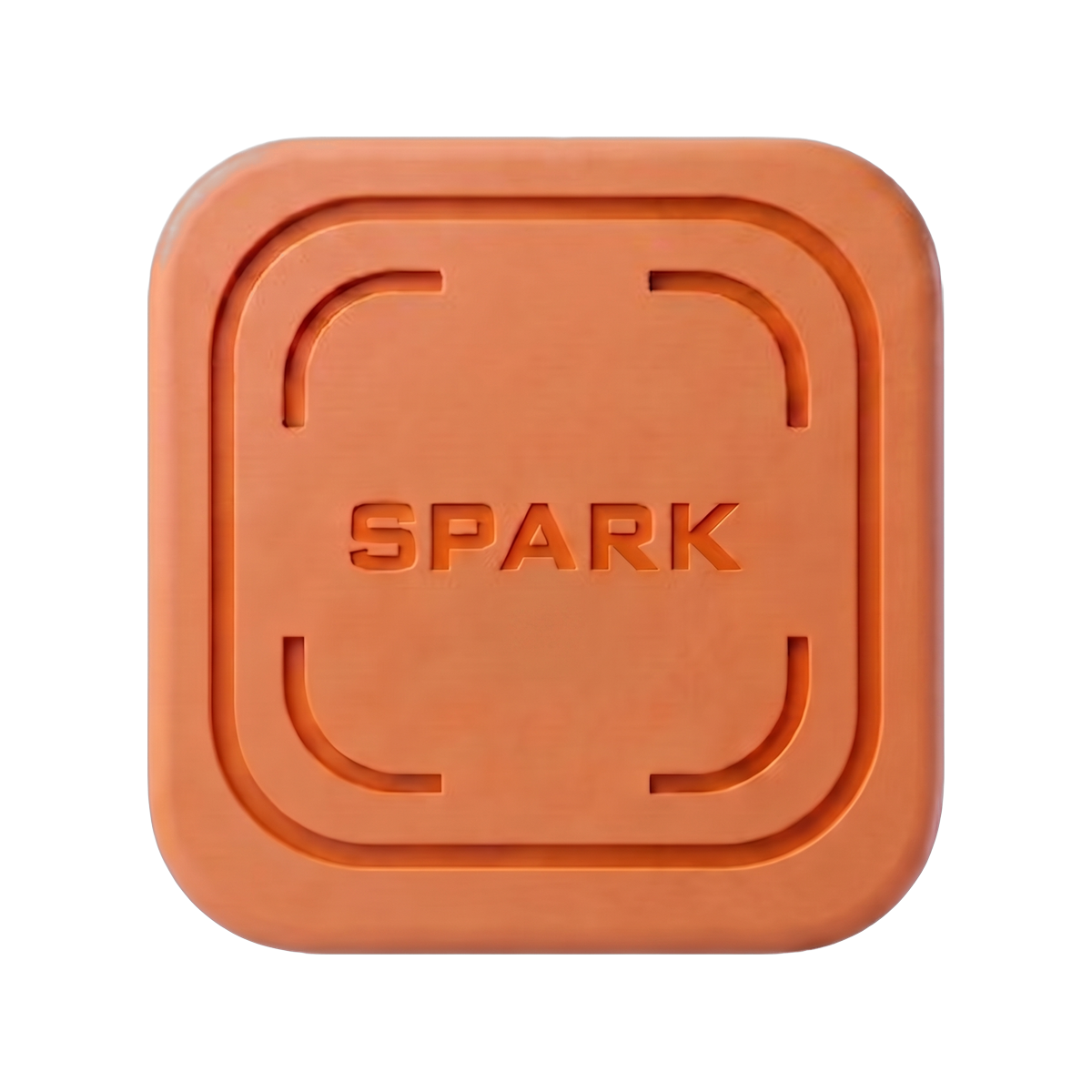
The off switch is in another room. The phone asks one question — is the key being held against me? — and until you fetch it and hold it there, the apps stay shut.
How to choose in one minute
- Never tried anything? Digital Wellbeing, tonight, free.
- Beaten Digital Wellbeing already? AppBlock, for Strict Mode — and read what its emergency unlock does before you rely on it.
- Want limits rather than bans? Stay Focused, for per-app quotas.
- Opening apps by reflex? ScreenZen or one sec, for the pause.
- Setting this for a child's phone? Family Link, and expect to have the conversation anyway.
- Keep switching your own blocker off at the worst moment? That is the pattern hardware is for.
What each blocker costs in rupees, which ones ship here, and what importing a Brick actually adds.
Read thisCommon questions
Which is the best free app blocker for Android?
Digital Wellbeing, because it is already installed, costs nothing and enforces at the system level. If you need more, AppBlock and Stay Focused both have usable free tiers — AppBlock caps Strict Mode at 24 hours on free, and Stay Focused shows ads.
Which Android blocker is hardest to bypass?
Of the software options, AppBlock — its Strict Mode can block the Settings app, recent apps, split screen and reinstalled applications. It still has a documented escape: support can issue a one-time code to disable Strict Mode.
Do app blockers work without accessibility permission?
Mostly not, for anything beyond whole-app timers. Blocking websites or seeing inside an app needs the accessibility service on Android, which is a broad permission — grant it only to a developer you are willing to trust with it.
Is a paid app blocker worth it?
Only after the free ones have failed for a reason you can name. If you uninstall blockers when they get inconvenient, a paid tier changes nothing about that — the thing to change is where the off switch lives.
Sources
- AppBlock: Strict Mode and unblocking (help) — Blocking Settings as “one of the most effective ways to prevent bypassing AppBlock on Android”, plus recent apps, split screen and reinstalled apps.
- AppBlock: What should I do if I am blocked? (help) — The unlock conditions, the 24-hour Strict Mode cap on the free version, and the support-issued one-time emergency code.
- AppBlock on Google Play — Indian storefront, 18 Sep 2026: in-app purchases listed from ₹25 to ₹11,700.
- Stay Focused on Google Play — Offered by INNOXAPPS LLP, Noida; the device-administrator and accessibility explanations quoted above; in-app purchases from ₹49 to ₹3,999 on the Indian storefront, 18 Sep 2026.
- Stay Focused (vendor site) — Strict Mode unlocked by PIN, expiry date, QR scan or retyping random text.
- Google Family Link FAQ — Children signed into iOS, web browsers or other unsupervised devices “can only be partially supervised”.
- Google Families Help: manage app limits — “System apps can't have app limits placed on them.”
- Google Families Help: stop supervising a teen's account — A teen aged 13 or over can request to stop supervision; the parent approves and both are notified.
More from the guides
How to block apps on Android: every method, honestly ranked
How to block apps on Android: Digital Wellbeing timers, Focus mode, a second user profile, launchers and physical keys, and where each one gives way.
Read the guideGetting startedHow to block apps at certain times on Android
Focus mode on a schedule is the built-in way — app timers and Bedtime mode are not. The steps, the Samsung version, and the schedules that survive a killed app.
Read the guideGetting startedApp blockers without a subscription: every option, and when free is enough
Want an app blocker without subscription fees? The free, built-in, open-source and buy-once options, how each one is bypassed, and when free is enough.
Read the guideMove the unlock off the phone.
Locking is one tap and never needs the key. Unlocking means getting up and holding your phone against it — a cost your tired self can't pay from the sofa. The app is free; the key is the one-time buy.