Spark vs a timed phone lock box
A timed phone lock box and Spark both put a physical obstacle between you and your phone, but they lock different things. A lock box such as kSafe takes the whole phone: once the lid locks, nothing on it can be used — calls included — until the timer runs out, and kSafe says there is no override short of breaking the plastic base. It needs no app, works with any phone that fits inside, and is the strictest thing in this comparison. Spark leaves the phone with you and blocks only the apps you choose, so calls get through; the way back in is walking to the key and holding your phone against it, with five emergency unlocks for life. Spark has not shipped yet.
Every figure below was read from kSafe’s own site or store listing on 13 Sept 2026. Prices change — check the source links before deciding. What this page says about Spark was last corrected on 13 Sept 2026.
A timer on a box the whole phone goes into
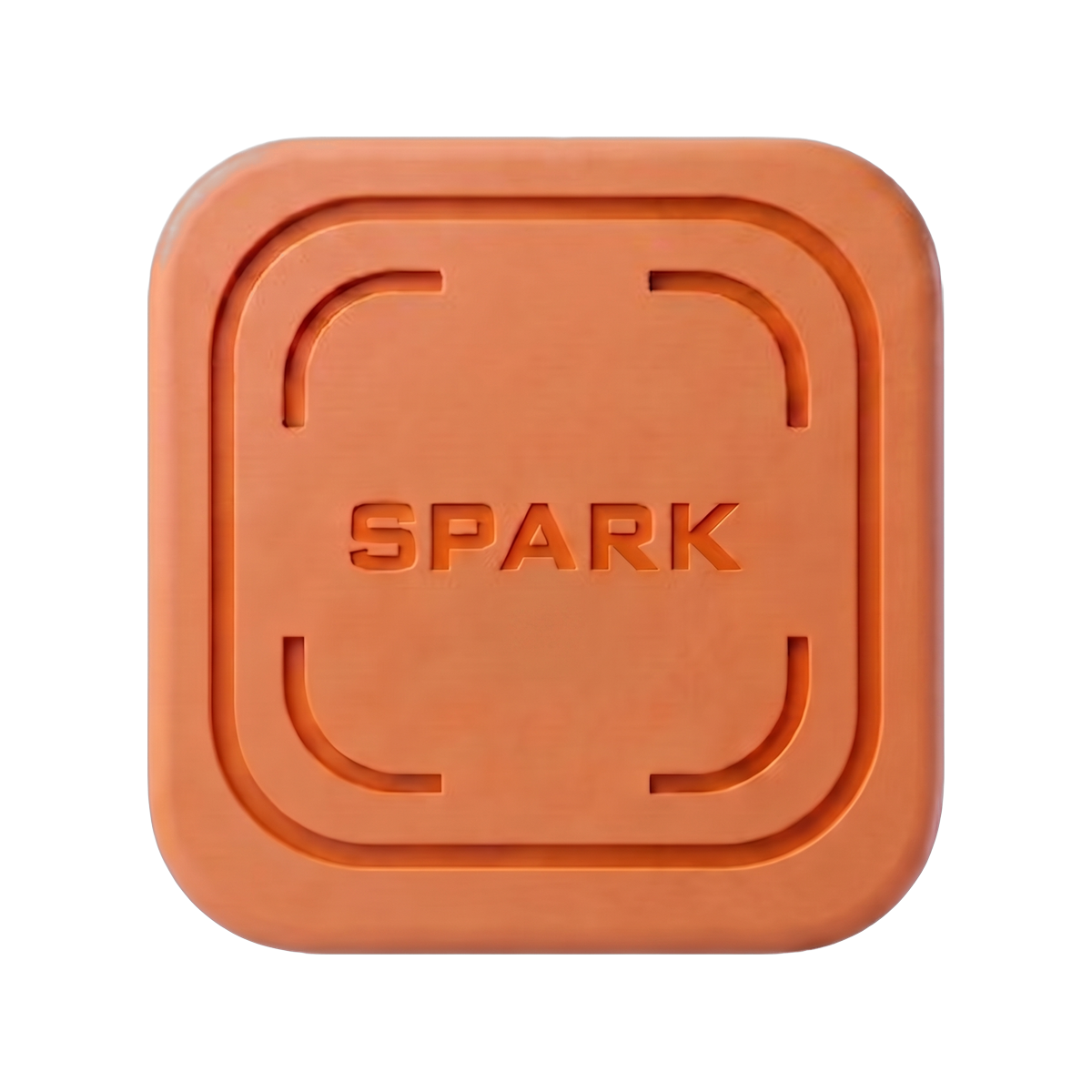

A key left in another room, held to the phone to unlock
At a glance
Side by side
| Dimension | kSafe | Spark |
|---|---|---|
| What it locks | The whole phone, inside a box | Only the apps you choose; the phone stays with you |
| Calls while locked | No — the phone is in the box | Yes — calls always get through |
| Getting in early | No override; breaking the base voids the warranty | Walk to the key and hold the phone to it; 5 emergency unlocks for life |
| Starting a session | Put the phone in, set 1 minute to 10 days, press | Lock now in the app, or a schedule — no key needed |
| Works with | Any phone that fits inside | iOS 17+ and Android 12+ — not in the app stores yet |
| App and account | None | Free app; a sign-in once to pair the key |
| Price | $59 (Mini, Medium) or $69 (XL), one-time, in US dollars | Free app, no subscription; the key is a one-time purchase |
| Ships to | Internationally, per its FAQ; no India price listed | India only |
| Returns | 14 days if unused, at your cost; 90-day warranty | None — replaced if it arrives damaged or does not work |
| Track record | On sale now | Not shipped yet — no reviews to quote |
kSafe
How kSafe works
kSafe, made by Kitchen Safe, is a plastic container with a timer-locking lid: put the phone — or anything else — inside, set a time from one minute to ten days, and the lid stays locked until the timer reaches zero.
Place the phone in the box, turn the dial to set the timer, and press it to lock. You have five seconds to cancel; after that the lid will not unlock until the timer reaches zero. Taking the batteries out, or letting them die, pauses the timer and leaves the lid locked. Because the whole phone is inside, there is nothing to set up on the phone itself — no app, no permission, no account.
Platforms
Any phone that fits inside, whatever it runs. kSafe lists the Mini for phones up to 5.8 inches (iPhone SE, Galaxy S10), the Medium for larger phones (iPhone 11 and 11 Pro, Galaxy Note10+), and the XL for everything the Medium takes plus an iPad mini.
Pricing
$59 for the Mini or Medium and $69 for the XL, one-time, in US dollars, with no app and no subscription; replacement bases are $19 (Mini, Medium) or $29 (XL). It runs on two AA batteries, which kSafe says last about six months. Its FAQ says it ships internationally; we could not find a rupee price or an India delivery estimate on its site. Unused boxes can be returned within 14 days, at the buyer's cost, to its US address; the warranty is 90 days.
How hard it is to get around
The hardest thing here to get round, by design. kSafe's FAQ says there are no built-in overrides, and removing the batteries only pauses the timer. The one way in is force: the box is plastic, "designed to be a deterrent, not an industrial safe", and the FAQ suggests that if temptation wins you break the base — which voids the warranty — and buy a replacement.
The difference that matters
The whole phone, or only the apps you chose
A lock box does not ask software to hold a line against the person who administers it. It puts the phone where your hand cannot reach it, and kSafe's lid stays shut until the timer ends. There is no setting to find, no permission to revoke and no app to delete, so for a fixed stretch — a revision morning, a Sunday, a family dinner — nothing in this comparison is stricter.
The same property is its limit. A box cannot tell a feed from a call from home, because it cannot see either: once the lid locks, the phone is out of reach for everything — calls, messages, maps, UPI payments — until the timer runs out, and there is no early release. kSafe's own FAQ warns against locking away anything time-critical, such as medicine, because a timer can be set longer than intended or the electronics can fail.
Spark makes the opposite trade. The phone stays in your pocket and only the apps you chose are locked, so calls get through and everything you did not block keeps working. What you give up is absoluteness: the way back in is a walk to wherever you left the key and a hold of the phone against it — about 15 seconds for the Bluetooth key, a tap for the NFC key — plus five emergency unlocks for life. On iPhone Spark relies on the same Screen Time permission as any blocker, which you can revoke in Settings, and deleting the app ends a session. A box has no route out short of breaking it.
The practical differences follow from that. A lock box has to be loaded by hand each time, so it cannot lock you out on a schedule while the phone is in your hand; Spark can. A box asks nothing of the phone, so it works with an old handset Spark cannot run on — Spark needs iOS 17+ or Android 12+ and is not in the app stores yet. kSafe is bought once in US dollars with nothing to pair; Spark's app is free with no subscription, but it locks nothing until a Spark is paired, and the key is bought once, in rupees quoted ex-GST, shipped within India.
To be fair
When kSafe is the better choice
A lock box is the strictest and simplest thing in this comparison. kSafe needs no app, no account, no permission and no pairing, so there is nothing on the phone to revoke, delete or reconfigure; it works with any phone that fits inside, whatever it runs; and once the lid locks, its maker says there is no override. For a planned, total disconnection — a revision morning, a Sunday, a family dinner — nothing else here is as absolute.
Choose kSafe if
- You want a total, time-boxed break — a revision morning, a Sunday, a dinner — and nobody needs to reach you while it runs.
- You want nothing on the phone at all: no app, no account, no permission, no pairing. A box asks nothing of the phone.
- Your phone is too old for Spark. A box works with any phone that fits inside; Spark needs iOS 17+ or Android 12+.
- You want no way out short of breaking something. With Spark you can always walk to the key, and there are five emergency unlocks.
- You want to lock away more than the phone. kSafe's own examples include credit cards, keys, cash, sweets and game controllers.
- You want it now. kSafe is on sale; Spark has not shipped.
Documented limitations
- It takes the whole phone: once the lid locks, nothing on it can be used, calls included, until the timer ends.
- No early release. kSafe's FAQ lists no built-in override; breaking the base is the only way in, and it voids the warranty.
- Every session starts with putting the phone in the box, so it cannot lock you out on a schedule.
- Priced in US dollars, with no rupee price or India delivery estimate that we could find on kSafe's site.
- It is plastic — "a deterrent, not an industrial safe", in its maker's words.
Sources
Questions
kSafe, answered
Is a phone lock box better than an app blocker?
For a fixed, total break, yes: nothing on the phone can undo it. For everyday use it is blunt, because it locks calls, maps and payments along with the feeds, and there is no early release. A software blocker keeps the phone usable, but it can be undone on the same phone. Spark sits between the two: it blocks only the apps you chose and puts the everyday unlock behind a key you have to walk to — though on iPhone, like any blocker, its permission can be revoked in Settings.
Can you open a kSafe early?
Not by any built-in means. Its FAQ says there are no overrides: you get five seconds to cancel after pressing the dial, and taking the batteries out only pauses the timer. The one way in is to break the plastic base, which voids the warranty; kSafe sells replacement bases.
Can I take calls with my phone in a lock box?
No. The phone is inside the box until the timer ends, so calls and messages wait with it. If someone may need to reach you — a child's school, an on-call rota, a parent — that rules a lock box out for daily use. Spark blocks only the apps you pick, and calls always get through.
Can you buy a phone lock box in India?
kSafe says it ships internationally and prices its boxes in US dollars, but we could not find a rupee price or an India delivery estimate on its site, so check at checkout. Spark's key is sold in rupees, quoted ex-GST, and ships within India — but it has not shipped yet.
Can I use a lock box and Spark together?
Yes. A box for the planned, total break — an exam morning, a Sunday — and Spark for ordinary days, when you need the phone for calls and payments but not for the feeds.
Read next
Related reading
Lock boxes, second phones, minimal phones and app keys, compared by what each physically stops and whether you can still be reached.
Read thisStop doomscrollingChanging where the phone is, not what you intend — and the free tools to use properly before buying anything.
Read thisFamily timePutting the phone away for family time: which two or three apps to block, and for how long.
Read thisCompare something else
The other ten
Spark vs Brick
Brick is $59, or ₹7,999 on an Indian marketplace. The Spark app blocker is free, with a Bluetooth or NFC key bought once in rupees. When Brick is better.
Read the comparisonUnpluqSpark vs Unpluq
Unpluq's Tag needs a Premium subscription to work at all. The Spark app is free and its Bluetooth or NFC key is bought once. When Unpluq fits better.
Read the comparisonFoqosSpark vs Foqos
Foqos is a free, open-source blocker for iPhone only, using any NFC tag. The Spark app blocker is built for Android 12+ and iOS 17+. Who should pick which.
Read the comparisonOpalSpark vs Opal
Opal is a polished screen-time app for iPhone, Android and Mac at $99.99 a year. The Spark app blocker is free, with a key bought once. When Opal wins.
Read the comparisonFreedomSpark vs Freedom
Freedom blocks Mac, Windows, iPhone and Android in one session, and wins if your problem is a laptop. On a phone, the Spark key changes the comparison.
Read the comparisonApple Screen TimeSpark vs Apple Screen Time
If you set your own Screen Time passcode, you can always get past your limits. The two fixes that work: give the code away, or move the unlock to a key.
Read the comparisonCold TurkeySpark vs Cold Turkey
Cold Turkey has the hardest desktop locks we compared — restart to unlock, 40-day delays — but no phone version. The Spark key is for the phone.
Read the comparisonAppBlockSpark vs AppBlock
AppBlock has the most determined Strict Mode on Android — and a support line that can unlock it. Spark puts the unlock on a key you walk to. When each wins.
Read the comparisonStay FocusedSpark vs Stay Focused
Stay Focused is an Indian-built Android blocker with per-app quotas and rupee pricing. Spark puts the unlock on a physical key. An honest comparison.
Read the comparisonGoogle Family LinkSpark vs Google Family Link
Family Link supervises a child's Android phone from a parent's account. Spark is not parental-control software at all. Which one your situation actually needs.
Read the comparisonFacts checked 13 Sept 2026 · Spark’s side corrected 13 Sept 2026
Locking is one tap. Unlocking costs you a walk.
No subscription. Buy a Spark once and sign in to pair it; after that, locking is one tap, even offline. Unlocking means fetching the key and holding your phone against it — which turns a bad moment into a walk.