Spark vs Opal
Opal is the most polished of the software blockers compared here, and it costs $99.99 a year. Its strictest setting, Deep Focus, is Pro-only, and Opal sells it as one you cannot cancel or bypass ("No way out"). Spark's app is free with no subscription, the key is a single payment rather than a renewing term, and unlocking means fetching that key and holding your phone against it, with five emergency unlocks for life. On iPhone both rest on the same Screen Time permission, which you can revoke in Settings unless someone else holds the Screen Time passcode.
Every figure below was read from Opal’s own site or store listing on 13 Sept 2026. Read on 13 Sep 2026, including the Indian App Store prices and the Deep Focus wording. Earlier versions of this page described a weekly Emergency Pass that Opal's own pages no longer mention. Prices change — check the source links before deciding. What this page says about Spark was last corrected on 13 Sept 2026.
A difficulty setting, up to a mode sold as uncancellable
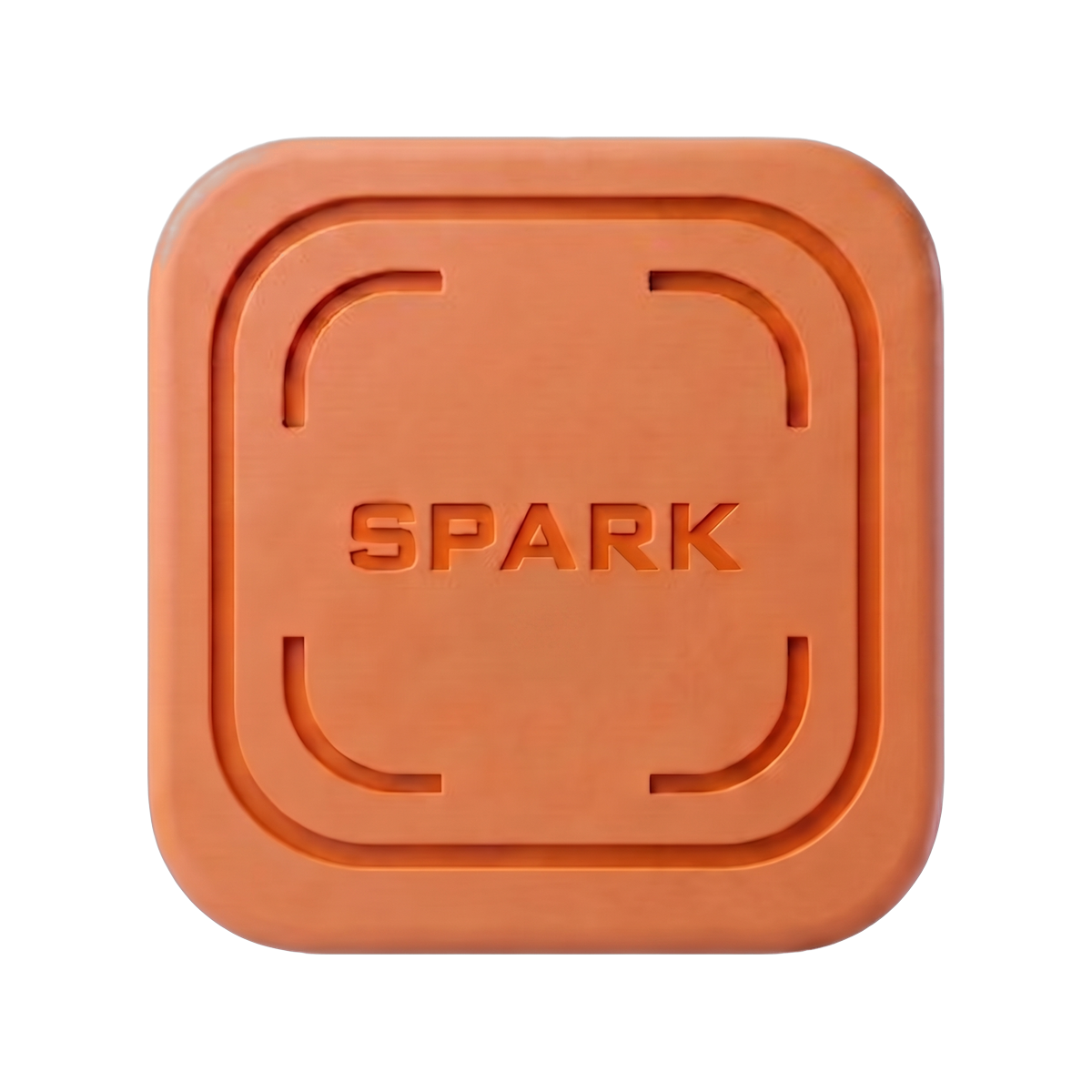

A key left in another room, held to the phone to unlock
At a glance
Side by side
| Dimension | Opal | Spark |
|---|---|---|
| Price | $99.99/yr, $19.99/mo, or $399 lifetime | Free app, no subscription; the key is a one-time purchase |
| Price in India | App Store, 13 Sep 2026: Yearly Plan ₹1,149; other plans ₹59 to ₹1,299 | The key is bought once, in rupees quoted ex-GST |
| Platforms | iPhone (iOS 18+), Mac, Android | iOS 17+ and Android 12+ — not in the app stores yet |
| What gates the unlock | A difficulty setting you choose per block | Holding the phone against the key; 5 lifetime emergency unlocks |
| Escape hatch | None in Deep Focus, per Opal; iOS lets you revoke its Screen Time permission | 5 emergency unlocks for life; hidden in Strict mode |
| Hardest mode | Pro only, sold as "No way out" | Strict mode (opt-in); on iPhone the permission can still be revoked |
| Analytics | Extensive — Focus Score, reports, streaks | Streaks and session history |
| Needs a second person? | For a true hard block, yes | No — the key stands in for them |
Opal
How Opal works
Opal is a freemium screen-time and app-blocking app built on Apple's Screen Time API, available for iPhone, Mac and Android, sold as a subscription with an optional lifetime tier.
Opal holds Screen Time permission and applies shields to apps and domains you select, via timed Sessions, daily Time Limits and per-app Open Limits. Each has a difficulty setting. The strictest, Deep Focus, is Pro-only, and Opal says it cannot be cancelled or bypassed from inside the app.
Platforms
iPhone (iOS 18.0+), macOS 13+, and Android.
Pricing
Free tier with 1 rule. Pro is $99.99 a year, or $19.99 a month, or $399 as a one-time lifetime purchase. Students get up to 50% off. A 30-day money-back guarantee applies to purchases made through their site, not through the App Store. In India, the App Store listed Opal's in-app purchases from ₹59 to ₹1,299 on 13 Sep 2026, including a Yearly Plan at ₹1,149; several plans appear under the same name at different prices.
How hard it is to get around
Moderate on its own. Opal says Deep Focus cannot be cancelled from the app, but iOS still lets you revoke Opal's Screen Time permission in Settings. The genuinely hard layer is Apple's own Lock Screen Time Settings passcode — which Opal's documentation recommends having a trusted person set, since knowing the code defeats it.
The difference that matters
Opal's own advice is the argument for a physical key
The most interesting thing in Opal's documentation is their recommendation for people who need a genuinely hard block: have a friend or family member set the Apple Screen Time passcode so you do not know it. That is sound advice, and it concedes the structural point — software running on a phone you administer cannot hold a line against you without someone else holding a credential.
A physical key is the same idea with the social cost removed. Instead of asking another person to hold a secret and be available whenever you need it changed, you leave an object in another room. Nobody has to be involved, nothing has to be negotiated, and the credential cannot be talked out of you.
That is the whole comparison, with one thing it is not. On features, analytics and polish, Opal is ahead, and it would be silly to claim otherwise. On the specific question of whether the block survives a bad Tuesday without recruiting a friend, a key in the hallway is a different category of answer — and it is bought once rather than renewed every year. It is not a stronger lock at the operating-system level: on iPhone, Spark relies on the same Screen Time permission Opal does, which you can revoke in Settings, and deleting the app ends a session. What changes is the everyday route back in — not a trip to Settings, but a walk.
To be fair
When Opal is the better choice
Of the products compared here, Opal is the most polished on iPhone and goes deeper into Apple's Screen Time API than almost anyone — allow lists, per-app daily limits, per-app open limits, Focus Filter and Shortcuts integration, plus genuinely good analytics that make people want to open the app.
Choose Opal if
- You are iPhone-first and want a beautiful daily-driver app with real analytics and per-app open limits that go well beyond on/off blocking.
- You refuse to carry an extra physical object. That is a legitimate preference and no key-based product will satisfy it.
- You want deep Apple-ecosystem automation through Shortcuts and Focus Filters.
- You are willing to hand your phone to someone you trust to set the Screen Time passcode, which gets Opal close to a true hard block with no hardware.
- You want it today. Opal is in the App Store; Spark has not shipped.
Documented limitations
- The hardest mode is Pro-only; below it, how hard each block is to end is a setting you chose, and can choose again next time.
- Everything rests on a Screen Time permission you granted, which you can revoke in Settings unless a separate Apple passcode is set by someone else. On iPhone, the same is true of Spark.
- Data and Screen Time do not sync between devices; each device is independent.
- $99.99 a year, $19.99 a month, or $399 lifetime — the most expensive option in this comparison set.
Sources
Questions
Opal, answered
Is there a free alternative to Opal?
On iPhone, Foqos is free and open source, and Apple's built-in Screen Time is free and worth exhausting before paying for anything. Spark has no subscription, but it is not free to use: the app locks nothing until you have bought and paired a key, which you pay for once.
Can you bypass Opal?
Not from inside the app in its strictest mode: Opal says Deep Focus cannot be cancelled or bypassed, and sells Hard Mode as "No way out". The route iOS leaves open is revoking Opal's Screen Time permission in Settings — which is why Opal's own guidance is to have someone else set the Apple Screen Time passcode if you need a harder block.
Is Opal worth $99 a year?
If you value the analytics and the interface, it is a strong product — and with someone else holding the Screen Time passcode, a genuinely hard one. If you keep breaking blocks in the moment by changing the settings yourself, more software features will not address the reason.
How much does Opal cost in India?
On 13 Sep 2026 the Indian App Store listed Opal's in-app purchases in rupees: a Yearly Plan at ₹1,149, Monthly Plans at ₹249 and ₹1,299, Weekly Plans at ₹59 and ₹199, and items called Opal Pro at ₹199 and Opal Pro Subscription at ₹579. The listing does not say which of these a given user is offered. Spark has no subscription: the key is bought once, and its price is on the buy page.
Read next
Related reading
Every way to block apps on iPhone, ranked — Screen Time, Guided Access and Shortcuts first, then paid blockers like Opal.
Read thisWhy blockers wear offWhy a software lock you can undo from the same phone — a revocable permission, a setting you chose — tends to give way.
Read thisCompare something else
The other ten
Spark vs Brick
Brick is $59, or ₹7,999 on an Indian marketplace. The Spark app blocker is free, with a Bluetooth or NFC key bought once in rupees. When Brick is better.
Read the comparisonUnpluqSpark vs Unpluq
Unpluq's Tag needs a Premium subscription to work at all. The Spark app is free and its Bluetooth or NFC key is bought once. When Unpluq fits better.
Read the comparisonFoqosSpark vs Foqos
Foqos is a free, open-source blocker for iPhone only, using any NFC tag. The Spark app blocker is built for Android 12+ and iOS 17+. Who should pick which.
Read the comparisonFreedomSpark vs Freedom
Freedom blocks Mac, Windows, iPhone and Android in one session, and wins if your problem is a laptop. On a phone, the Spark key changes the comparison.
Read the comparisonApple Screen TimeSpark vs Apple Screen Time
If you set your own Screen Time passcode, you can always get past your limits. The two fixes that work: give the code away, or move the unlock to a key.
Read the comparisonCold TurkeySpark vs Cold Turkey
Cold Turkey has the hardest desktop locks we compared — restart to unlock, 40-day delays — but no phone version. The Spark key is for the phone.
Read the comparisonkSafeSpark vs a timed phone lock box
A timed phone lock box like kSafe takes the whole phone: no calls, no early release. The Spark app blocker locks only the apps you pick. When a box wins.
Read the comparisonAppBlockSpark vs AppBlock
AppBlock has the most determined Strict Mode on Android — and a support line that can unlock it. Spark puts the unlock on a key you walk to. When each wins.
Read the comparisonStay FocusedSpark vs Stay Focused
Stay Focused is an Indian-built Android blocker with per-app quotas and rupee pricing. Spark puts the unlock on a physical key. An honest comparison.
Read the comparisonGoogle Family LinkSpark vs Google Family Link
Family Link supervises a child's Android phone from a parent's account. Spark is not parental-control software at all. Which one your situation actually needs.
Read the comparisonFacts checked 13 Sept 2026 · Spark’s side corrected 13 Sept 2026
Locking is one tap. Unlocking costs you a walk.
No subscription. Buy a Spark once and sign in to pair it; after that, locking is one tap, even offline. Unlocking means fetching the key and holding your phone against it — which turns a bad moment into a walk.