Spark vs Unpluq
Unpluq and Spark both put a physical object between you and a distracting app, but they are built on opposite economics and opposite philosophies. The Unpluq Tag only functions with a paid Premium subscription, and its model is friction-then-access: pass a barrier and you are through. Spark's app is free with no subscription and the key is a one-time purchase, and its model is a walk rather than an effort: unlocking means going to wherever you left the key and holding your phone against it, with five emergency unlocks, for life, as the only way round.
Every figure below was read from Unpluq’s own site or store listing on 2 Sept 2026. Prices change — check the source links before deciding. What this page says about Spark was last corrected on 13 Sept 2026.
Tap the Tag, or shake the phone for five seconds
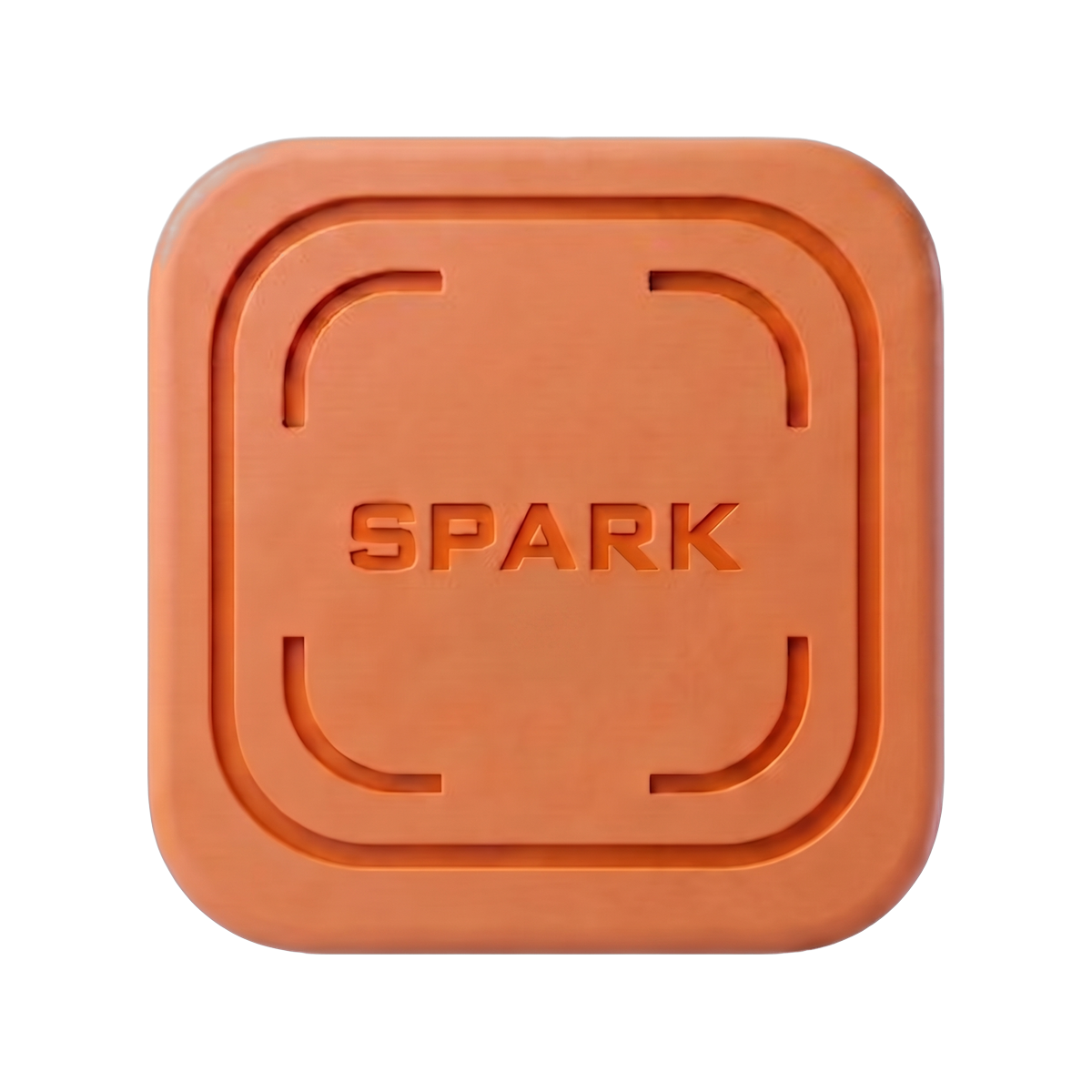

A key left in another room, held to the phone to unlock
At a glance
Side by side
| Dimension | Unpluq | Spark |
|---|---|---|
| Subscription | Mandatory — Tag is inert without it | None — the app is free |
| Hardware | $26.50 Tag (NFC), inert without Premium | Bluetooth or NFC key, sold separately — one-time purchase |
| Model | Friction — pass a barrier, then access | A walk — unlock by holding the phone against the key |
| Free tier | 2 apps, 1 schedule | None — the app is free, but locks nothing until a Spark is paired |
| Blocking style | Scheduled, always-on | One-tap sessions, schedules and per-app daily limits |
| Emergency access | Lost-tag mode, 5 uses for life; 5-minute emergency mode | 5 emergency unlocks for life; hidden in Strict mode |
| Platforms | iPhone 8+ (iOS 16+), Android with NFC | iOS 17+ and Android 12+ — not in the app stores yet |
| Family product | Yes | No |
Unpluq
How Unpluq works
Unpluq is a patented NFC keyfob that acts as a physical barrier for a scheduled app blocker, and which only works while you hold a paid Unpluq Premium subscription.
You set schedules for when chosen apps are blocked. To open a blocked app during a block you pass a barrier — tapping the Tag, or a digital alternative such as shaking the phone for five seconds, tapping seven buttons, scanning a QR code, or walking on Android. The model is friction, not lockout.
Platforms
iPhone 8 and later, and Android devices with NFC. The app requires iOS 16.0 or later. iPads are not supported.
Pricing
A subscription is mandatory — the Tag does not function without Unpluq Premium. Prepaid terms bought on their site run $30.00 for 3 months, $48.00 for 6 months with the Tag, and $83.00 for 12 months with the Tag. Subscribing inside the app costs more: $6.99 per month or $59.99 per year. The Tag alone is $26.50 and is inert without a subscription. A free tier blocks your two most distracting apps on one schedule.
How hard it is to get around
Deliberately soft, because the philosophy is friction rather than lockout. There is a lost-tag mode limited to five uses for the lifetime of the account, and an emergency mode that grants full access for five minutes — during which you can change your barrier type, so emergency mode can be used to permanently downgrade your own barrier. Several digital barriers can be repeated wherever you are sitting.
The difference that matters
A barrier you can pass versus a key you must fetch
Unpluq's design assumes that a moment of deliberate effort is enough: shake the phone, tap the tag, scan the code, and you are through. For a lot of people that is exactly right, and it has the pleasant property that you are never actually stuck.
Spark assumes the opposite — that any effort you can perform where you are sitting will eventually be performed. So the requirement is not an effort, it is a trip: unlocking means holding your phone against the key — for about 15 seconds with the Bluetooth Spark, a tap with the NFC one — so if you left it in the kitchen, the route through is walking to the kitchen. The one exception is five emergency unlocks, for life, which Strict mode hides.
The subscription difference is the other half. Unpluq's Tag is a credential for a service, so it stops working when the subscription does. Spark has no subscription: you buy the key once, in rupees quoted ex-GST, and there is no term to expire. It is not account-free — pairing the key needs a sign-in and an internet connection, and your sessions, modes and schedules sync to Spark's servers — but there is nothing to renew.
To be fair
When Unpluq is the better choice
Unpluq is the most behaviourally sophisticated option in this category. It has a genuine free tier, a real range of barriers so the system degrades gracefully when you forget the tag rather than trapping you, per-time-window schedules, contact whitelisting so important people can still reach you, and a separate family product.
Choose Unpluq if
- You want to start free. Unpluq's free tier blocks two apps on one schedule; Spark's app does nothing until you have bought and paired a key.
- You need a fallback that never runs out for the times you genuinely do not have the key — if you are a parent on call or you travel, a hard lockout is a risk rather than a useful constraint. Spark's five emergency unlocks are for life and do not refill.
- You need contact whitelisting so specific people can always reach you.
- You need a family or parental-control product, which we do not offer.
Documented limitations
- The subscription is mandatory: the $26.50 Tag does nothing without Premium.
- Subscribing in-app costs more than the prepaid terms on their site.
- The free tier is capped at two apps and one schedule.
- Emergency mode grants five minutes of full access during which the barrier type itself can be changed.
- iPads are not supported.
Sources
Questions
Unpluq, answered
Does the Unpluq Tag work without a subscription?
No. Unpluq's own FAQ states the Tag only works with Unpluq Premium, so the standalone Tag is inert on its own.
Is there a free alternative to Unpluq?
Foqos is a free open-source iPhone app that works with commodity NFC tags, and Apple's Screen Time is free and built into every iPhone. Unpluq's own free tier covers two apps on one schedule. Spark is not a free alternative: the app has no subscription, but it locks nothing until you have bought and paired a key.
What is the difference between a barrier and a key?
A barrier is an effort — shake, tap, scan — that you can perform wherever you are. A key has to be fetched: with Spark, unlocking means holding your phone against it, so if the key is in another room, you have to go there. Barriers are more forgiving; a walk is harder to talk yourself past.
Read next
Related reading
Every physical option compared — lock boxes, second phones, minimal phones and app keys — including the ones that need a subscription.
Read thisWhy blockers wear offWhy friction you can get past from the sofa — a countdown, a dialog, a typed sentence — stops working, and what keeps working instead.
Read thisCompare something else
The other ten
Spark vs Brick
Brick is $59, or ₹7,999 on an Indian marketplace. The Spark app blocker is free, with a Bluetooth or NFC key bought once in rupees. When Brick is better.
Read the comparisonFoqosSpark vs Foqos
Foqos is a free, open-source blocker for iPhone only, using any NFC tag. The Spark app blocker is built for Android 12+ and iOS 17+. Who should pick which.
Read the comparisonOpalSpark vs Opal
Opal is a polished screen-time app for iPhone, Android and Mac at $99.99 a year. The Spark app blocker is free, with a key bought once. When Opal wins.
Read the comparisonFreedomSpark vs Freedom
Freedom blocks Mac, Windows, iPhone and Android in one session, and wins if your problem is a laptop. On a phone, the Spark key changes the comparison.
Read the comparisonApple Screen TimeSpark vs Apple Screen Time
If you set your own Screen Time passcode, you can always get past your limits. The two fixes that work: give the code away, or move the unlock to a key.
Read the comparisonCold TurkeySpark vs Cold Turkey
Cold Turkey has the hardest desktop locks we compared — restart to unlock, 40-day delays — but no phone version. The Spark key is for the phone.
Read the comparisonkSafeSpark vs a timed phone lock box
A timed phone lock box like kSafe takes the whole phone: no calls, no early release. The Spark app blocker locks only the apps you pick. When a box wins.
Read the comparisonAppBlockSpark vs AppBlock
AppBlock has the most determined Strict Mode on Android — and a support line that can unlock it. Spark puts the unlock on a key you walk to. When each wins.
Read the comparisonStay FocusedSpark vs Stay Focused
Stay Focused is an Indian-built Android blocker with per-app quotas and rupee pricing. Spark puts the unlock on a physical key. An honest comparison.
Read the comparisonGoogle Family LinkSpark vs Google Family Link
Family Link supervises a child's Android phone from a parent's account. Spark is not parental-control software at all. Which one your situation actually needs.
Read the comparisonFacts checked 2 Sept 2026 · Spark’s side corrected 13 Sept 2026
Locking is one tap. Unlocking costs you a walk.
No subscription. Buy a Spark once and sign in to pair it; after that, locking is one tap, even offline. Unlocking means fetching the key and holding your phone against it — which turns a bad moment into a walk.