Spark vs Foqos
Foqos is free, open source, and works with any NFC tag you already own — if you want to spend nothing at all and you have an iPhone, it is a genuinely good answer and we will say so plainly. Spark differs in three ways that matter to some people and not to others: it is built for Android 12+ as well as iOS 17+, it is a packaged product — a manufactured Bluetooth or NFC key, bought once — rather than a tag you source yourself, and once that key is paired, locking never needs it. Spark's key is not harder to copy: the NFC Spark is a standard tag, and the Bluetooth Spark's signal can be recorded and replayed. And Spark has not shipped yet.
Every figure below was read from Foqos’s own site or store listing on 2 Sept 2026. The exception is the Foqos for Mac companion, read on 13 Sep 2026. Prices change — check the source links before deciding. What this page says about Spark was last corrected on 13 Sept 2026.
Scan a tag or code you hid somewhere inconvenient
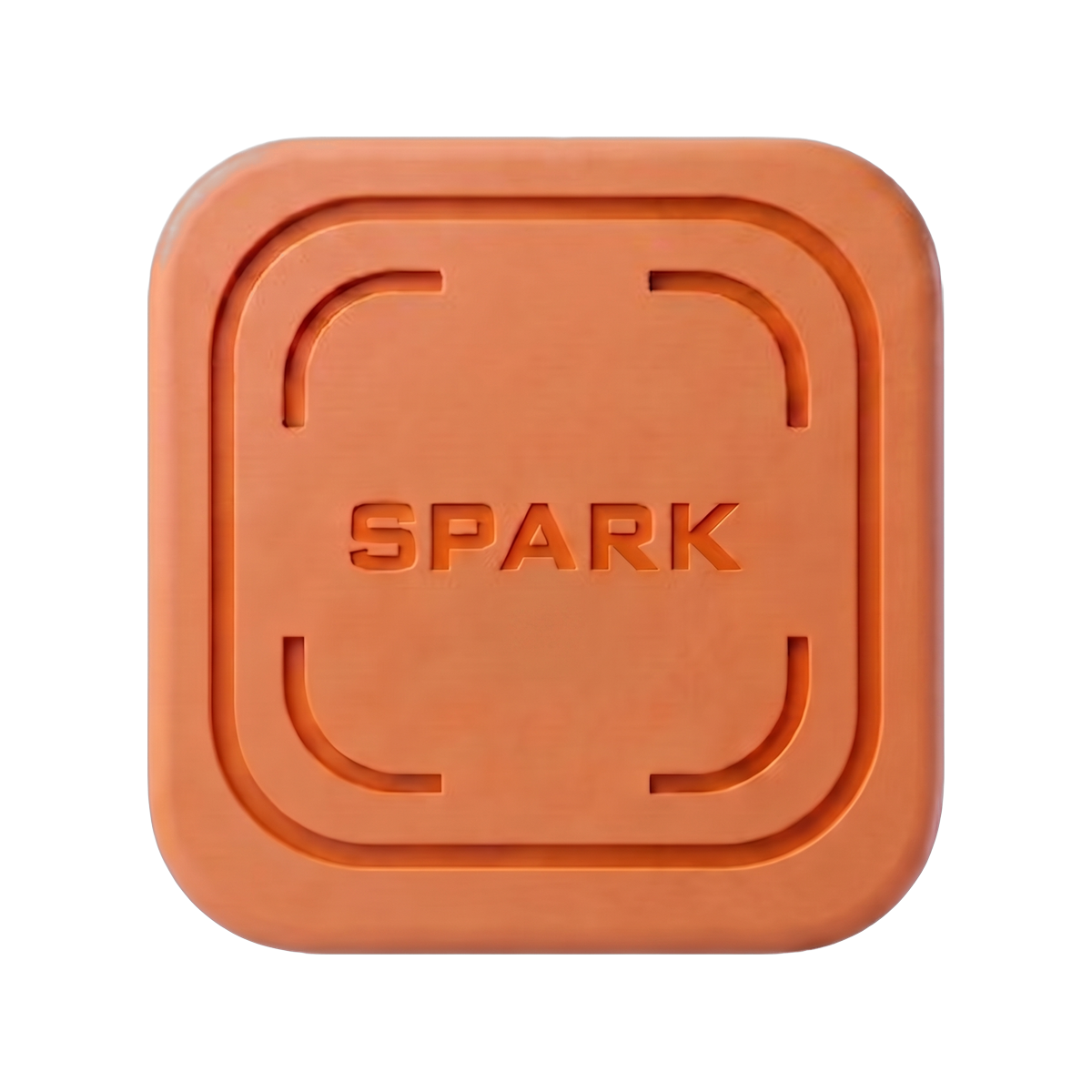

A key left in another room, held to the phone to unlock
At a glance
Side by side
| Dimension | Foqos | Spark |
|---|---|---|
| Price | Free (optional $1.99 tip) | Free app, no subscription; the key is a one-time purchase, needed to lock |
| Platforms | iPhone only, iOS 17.6+ | iOS 17+ and Android 12+ — not in the app stores yet |
| Credential | Any NFC tag or printed QR code | A Spark key: Bluetooth (hold ~15s) or NFC (tap) |
| Can the credential be copied? | Yes — codes photographed, tags cloned | Yes — the NFC key is a standard tag; the Bluetooth key's signal can be recorded and replayed |
| Hardware | Source your own tag or print a code | A manufactured key, replaced if it arrives damaged or does not work |
| Open source | Yes, MIT | No |
| Account | None — everything stays on the device | Needed to pair the key; settings sync to Spark's servers |
| Locking needs the credential? | Depends on the strategy chosen | No — once paired, Lock now or a schedule |
| Support | Individual developer, optional tips | Not shipped yet |
Foqos
How Foqos works
Foqos is a free, MIT-licensed open-source iPhone app blocker that starts and stops sessions with any generic NFC tag, a QR code, a timer, or manually.
It uses Apple's Screen Time API to block chosen apps and websites, with twelve documented activation and deactivation strategies including NFC, QR, timers and combinations. The intended workflow is to hide the tag or printed code so you have to physically retrieve it.
Platforms
iPhone only, requiring iOS 17.6 or later. No iPad app. On a Mac, a free companion, Foqos for Mac (macOS 14 or later), syncs your blocked websites from the iPhone through iCloud. No Android version — their site points Android users to two unaffiliated third-party apps.
Pricing
Free, with no paid features. The only in-app purchase is an optional $1.99 tip for the developer. NFC tags are whatever you choose to buy; printed QR codes cost nothing.
How hard it is to get around
Depends on the strategy chosen. A QR code is an image, so it can be photographed or reprinted and scanned later, which defeats the hide-the-code workflow. Generic NFC tags such as NTAG213 are writable and cloneable with commodity tools — as is any standard NFC tag, Spark's NFC key included. Several of the strategies involve no physical credential at all.
The difference that matters
Free and iPhone-only, or a key you buy once
Foqos's great strength is its flexibility. Using commodity tags and printed codes means the hardware costs cents and you can put credentials in several rooms at once — genuinely better than buying a device per location. The trade is that the credential is copyable: a QR code can be photographed before you hide it, and a writable NFC tag can be cloned.
That is not a point in Spark's favour, and earlier versions of this page said it was. Spark's NFC key is a standard tag that can be copied the same way, and the Bluetooth key broadcasts a fixed identity that can be recorded and replayed. Neither product stops someone who sets out to copy their own key; both make the ordinary route back in a walk, and rely on you not going to that trouble.
The differences that do hold are simpler. Foqos is iPhone-only; Spark is built for iOS 17 and later and Android 12 and later, though it is not in the app stores yet. Foqos leaves you to source a tag or print a code; Spark sells a manufactured key — Bluetooth, on a CR2032 coin cell, or battery-free NFC — and replaces one that arrives damaged or does not work. And in Foqos the physical credential is optional on both sides, depending on the strategy; in Spark, once a key is paired, locking never needs it and unlocking always does, apart from five emergency unlocks for life.
Privacy runs the other way. Foqos keeps everything on the device, with no account and no analytics. Spark needs a sign-in and an internet connection to pair the key, and your sessions, modes and schedules sync to Spark's servers.
The cost side is where Foqos wins outright and we will not dress it up. Spark's app is free with no subscription, but it locks nothing until a key is paired, and the key is a manufactured object: a one-time purchase in rupees quoted ex-GST, shipped within India. A commodity tag costs a fraction of that and you can buy it anywhere in the world. If price is the deciding factor, the deciding factor has already decided.
To be fair
When Foqos is the better choice
Foqos is the only open-source option in this category — free, MIT-licensed and auditable — and the most flexible: twelve activation strategies including combinations the paid products do not offer, it works with any commodity tag or a free printed code rather than proprietary hardware, and it keeps everything on device with no account and no analytics.
Choose Foqos if
- You want to spend nothing at all. If your objection is fundamentally that you do not want to buy hardware, Foqos is the correct recommendation.
- You want to read the source before granting a blocker Screen Time permissions. That is a reasonable thing to want and only Foqos allows it.
- You want nothing to sign into. Foqos needs no account; Spark needs one to pair the key.
- You want credentials in several places at once — office, bedroom, car — without buying a device for each.
- You need one of their strategy combinations, such as a timed session that can only be ended early with a physical tag.
Documented limitations
- iPhone only, and requires iOS 17.6 or later — a higher floor than most alternatives.
- You source your own tag or print your own code; there is no packaged hardware, mount or replacement path.
- Published by an individual developer, funded by optional tips.
- QR codes can be photographed and generic NFC tags can be cloned, which weakens the hide-the-credential workflow — true of Spark's keys as well.
- No family or parental product — nor does Spark have one.
Sources
Questions
Foqos, answered
Is Foqos really free?
Yes. No features are paywalled and there is no subscription. The only in-app purchase is a voluntary $1.99 tip for the developer.
Does Foqos work on Android?
No. Foqos is iPhone-only and their own site points Android users to two unaffiliated third-party apps.
Can someone copy an NFC tag or QR code?
Yes. A QR code is an image that can be photographed before you hide it, and common NFC tags are writable and cloneable with ordinary tools — including our own NFC key, which is a standard tag and which we would rather say plainly than have you discover. The Bluetooth Spark is no different in kind: it broadcasts a fixed identity, and that signal can be recorded and replayed. None of these keys stops someone who sets out to copy it. What each one does is make the ordinary unlock a walk, and whether that is enough depends on whether you would go to the trouble of copying your own key.
Read next
Related reading
Foqos has no Android version. Every way to block apps on Android, free ones first, honestly ranked.
Read thisBlocking apps on iPhoneStaying on iPhone? Every way to block apps there, from Screen Time to a physical key, ranked.
Read thisDigital detox devicesNFC tags, app keys, lock boxes and second phones: what each one physically stops, and how each is defeated.
Read thisCompare something else
The other ten
Spark vs Brick
Brick is $59, or ₹7,999 on an Indian marketplace. The Spark app blocker is free, with a Bluetooth or NFC key bought once in rupees. When Brick is better.
Read the comparisonUnpluqSpark vs Unpluq
Unpluq's Tag needs a Premium subscription to work at all. The Spark app is free and its Bluetooth or NFC key is bought once. When Unpluq fits better.
Read the comparisonOpalSpark vs Opal
Opal is a polished screen-time app for iPhone, Android and Mac at $99.99 a year. The Spark app blocker is free, with a key bought once. When Opal wins.
Read the comparisonFreedomSpark vs Freedom
Freedom blocks Mac, Windows, iPhone and Android in one session, and wins if your problem is a laptop. On a phone, the Spark key changes the comparison.
Read the comparisonApple Screen TimeSpark vs Apple Screen Time
If you set your own Screen Time passcode, you can always get past your limits. The two fixes that work: give the code away, or move the unlock to a key.
Read the comparisonCold TurkeySpark vs Cold Turkey
Cold Turkey has the hardest desktop locks we compared — restart to unlock, 40-day delays — but no phone version. The Spark key is for the phone.
Read the comparisonkSafeSpark vs a timed phone lock box
A timed phone lock box like kSafe takes the whole phone: no calls, no early release. The Spark app blocker locks only the apps you pick. When a box wins.
Read the comparisonAppBlockSpark vs AppBlock
AppBlock has the most determined Strict Mode on Android — and a support line that can unlock it. Spark puts the unlock on a key you walk to. When each wins.
Read the comparisonStay FocusedSpark vs Stay Focused
Stay Focused is an Indian-built Android blocker with per-app quotas and rupee pricing. Spark puts the unlock on a physical key. An honest comparison.
Read the comparisonGoogle Family LinkSpark vs Google Family Link
Family Link supervises a child's Android phone from a parent's account. Spark is not parental-control software at all. Which one your situation actually needs.
Read the comparisonFacts checked 2 Sept 2026 · Spark’s side corrected 13 Sept 2026
Locking is one tap. Unlocking costs you a walk.
No subscription. Buy a Spark once and sign in to pair it; after that, locking is one tap, even offline. Unlocking means fetching the key and holding your phone against it — which turns a bad moment into a walk.